
Oceanography and Natural Sciences Department
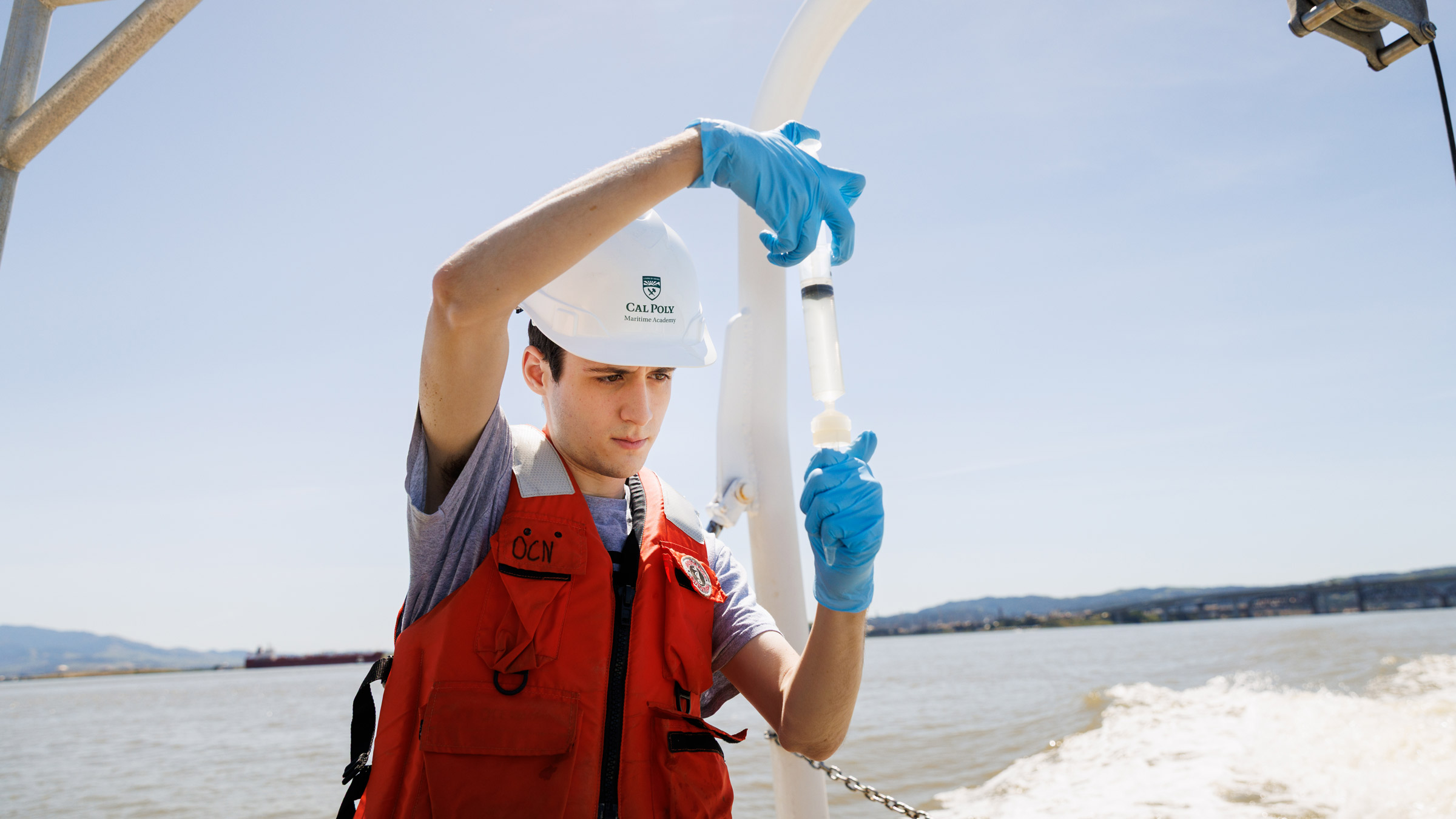
The Oceanography and Natural Sciences (OcNS) Department at Cal Poly Maritime Academy empowers students to explore Earth’s systems through an integrated approach to science.
The OcNS Department integrated with Cal Poly's Bailey College of Science and Mathematics in fall 2025, and operates out of the Cal Poly Solano Campus in Vallejo, California. In addition to providing foundational coursework in the natural sciences (chemistry, physics and life sciences), OcNS faculty offer specialized courses in oceanography that prepare students for advanced study and research opportunities.
Our programs combine rigorous coursework with hands-on, field-based experiences that embody Cal Poly’s Learn by Doing philosophy. From studying coastal ecosystems, investigating climate dynamics and predicting tsunami risk, students and faculty work side by side to address real-world ocean challenges. Graduates of our B.S. Oceanography degree leave prepared for advanced study or careers in oceanography, environmental and climate science and natural resource management.
More About the Department
- Curriculum Information: B.S. or Minor in Oceanography
- Research
- Faculty Directory
- Cal Poly Maritime Academy Website
| Oceanography | Marine Sciences | |
|---|---|---|
| Campus Location |
Cal Poly Maritime Academy, |
California Polytechnic State University |
| Degrees & Programs | B.S., Minor | B.S., M.S., Minor |
| Curriculum | Targeted curriculum focused on physical, chemical, biological and geological oceanography. Includes instrumentation coursework and a required internship. | Offers a broad foundation in marine sciences and flexibility to focus on sub-disciplines: marine biology, chemistry, oceanography, technical and instrumentation-focused areas in engineering, etc. More about Marine Sciences curriculum |
| Department | Oceanography and Natural Sciences Department | Biological Sciences Department |
| Unique Features | Geographic location offers proximity to San Francisco Bay research partners, state agencies and policy makers in Sacramento, and Bay Area technology industry. | Geographic location offers proximity to a key campus facility, the Cal Poly Pier in Avila Beach, which houses classroom/lab spaces on the Pacific Ocean. The Pier is also a TEAMER facility as designated by the U.S. Department of Energy. Additional nearby locations include numerous sites in Monterey Bay, Big Sur, Ragged Point, Morro Bay, Pismo Beach, etc.; often involved with field research and coursework activities. |