
Finding Home in Restoration: Marine Science Student Emma Riley
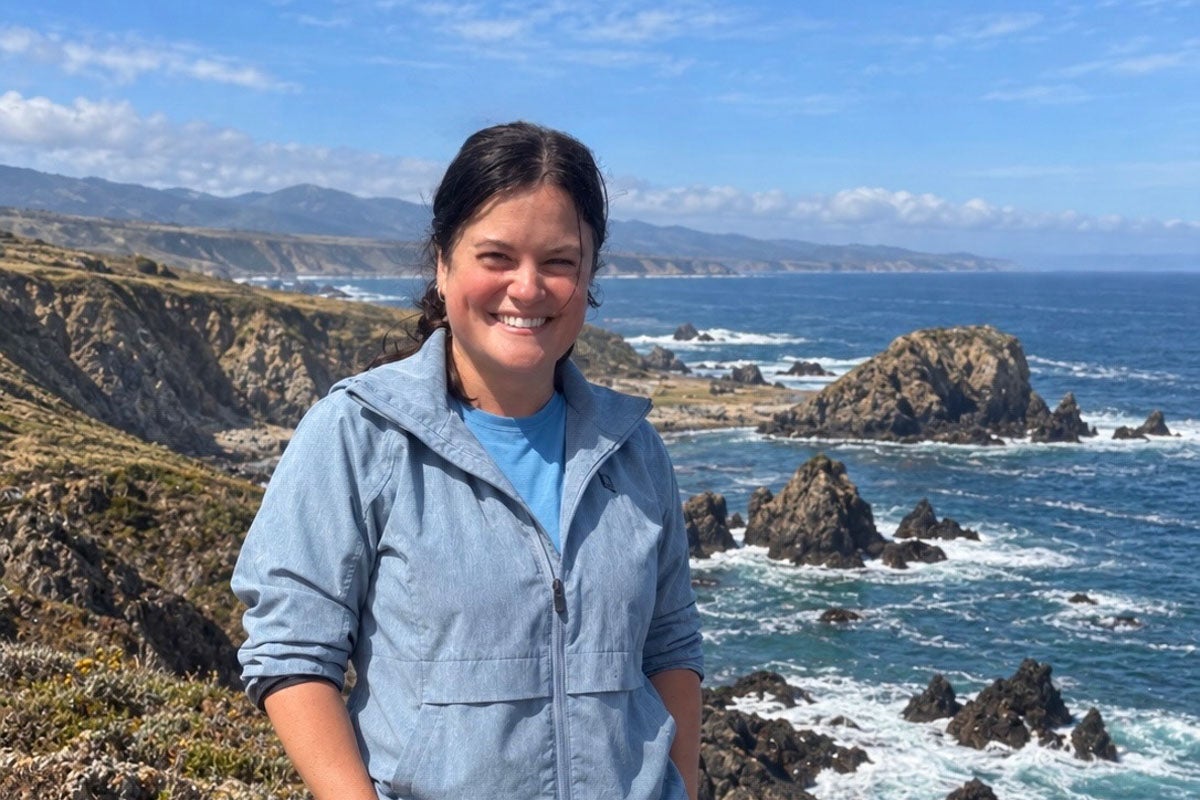
Emma Riley does some of her best thinking along Point Buchon. The Cal Poly marine science student and lifelong surfer has spent countless mornings hiking its bluffs above the Pacific, where the coastline has helped shape the questions that now drive her research.
Ecology comes from the Greek oikos, meaning “home,” and for Riley the connection feels almost literal. “I love the idea that ecology is, at its root, the study of home,” Riley said. “That has always felt right to me. Ecology is really about understanding the places we belong to.”
Point Buchon is a place she knows as home, and one that has taught her to think deeply about other kinds of home too: the ecological ones that species inhabit, lose and, sometimes, might be able to find again.
Those questions follow her back to Cal Poly, where curiosity about the coast has taken shape as undergraduate research spanning restoration ecology, population genomics and the long ecological history of California.
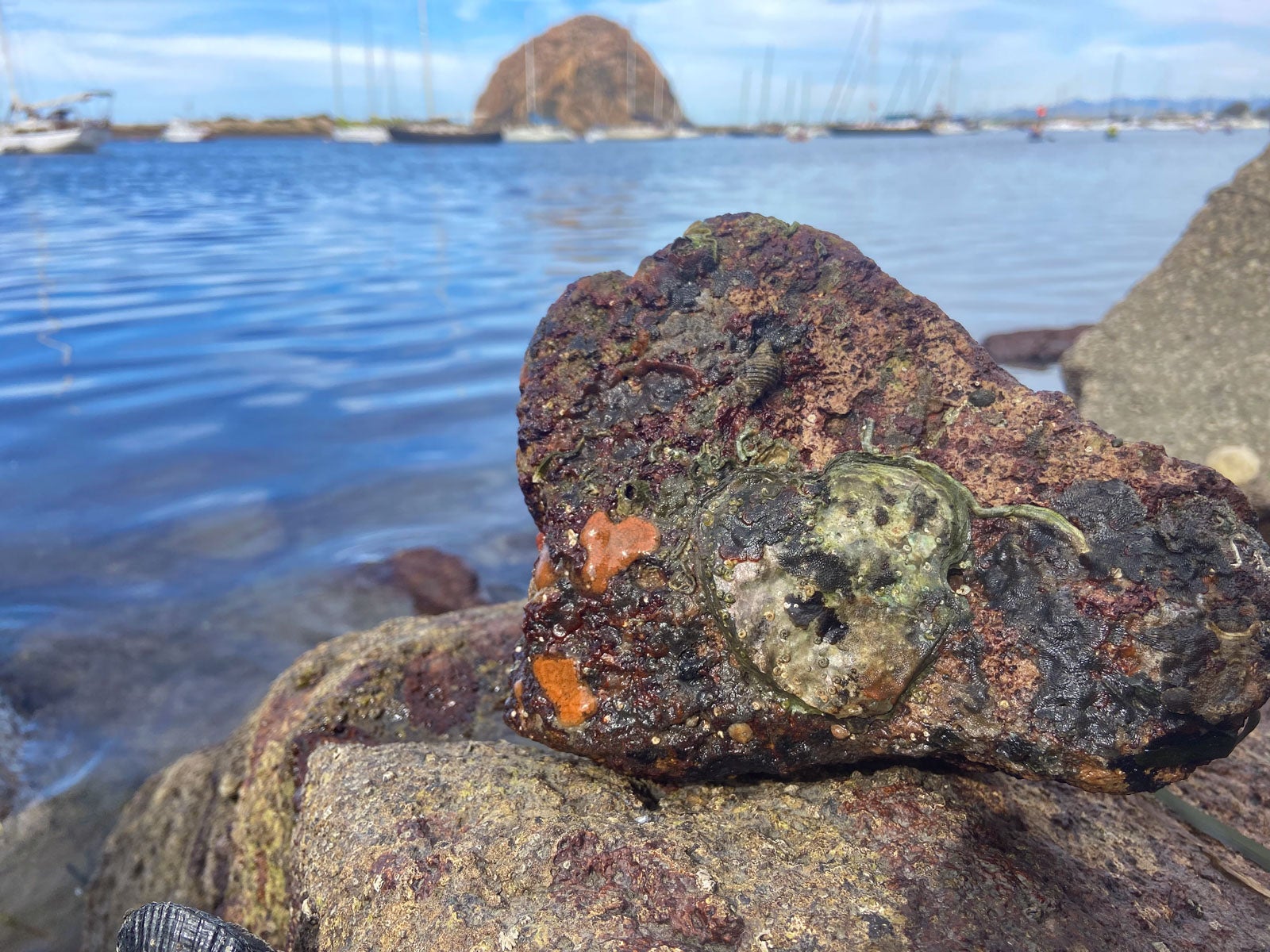
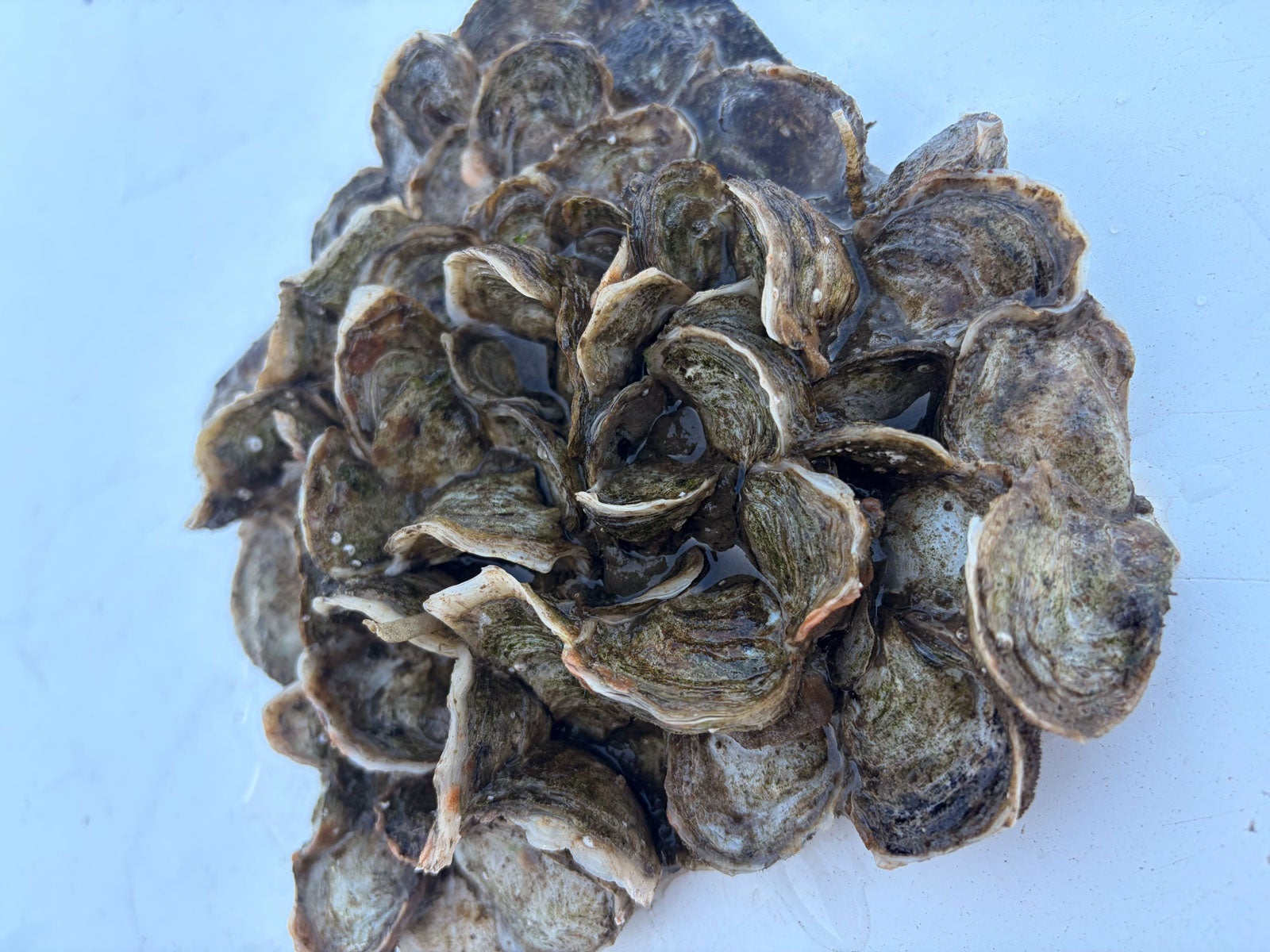
One species has become central to that work: the Olympia oyster (Ostrea lurida), the only oyster native to the U.S. West Coast. Once widespread along the Pacific coast, Olympia oyster populations declined dramatically beginning in the late 1800s and early 1900s as commercial harvesting, habitat loss, invasive species and other environmental changes reshaped the estuaries and shorelines they inhabited. Today, restoration efforts throughout California are asking where populations remain, how they are connected, and where the species might thrive again.
Riley is a student researcher in Cal Poly’s Bioinformatics Research Group, where she works throughout the academic year with Dr. Jean Davidson, a biological sciences professor. The group uses population-genomic approaches to understand relationships among Olympia oyster populations across West Coast estuaries and how that information can support restoration.
Working with genomic data drew Riley toward a particular kind of question. She began looking for ecological patterns in the data: relationships among populations, unexpected connections across geography, and traces of the histories that may have shaped them.
Her work is also part of a broader community of Olympia oyster research at Cal Poly, including developing genomic resources for the species and evaluating restorative aquaculture practices by Dr. Kevin Johnson, a Cal Poly aquaculture specialist affiliated with California Sea Grant.
“Genomics can reveal these incredible patterns in how populations are related across the coast,” Riley said. “I became interested in what the longer history of those places might add to how we understand those patterns. The question at the center of my work is: How does the history of our coastline impact how we restore native species?”
As a 2026 Frost Summer Undergraduate Research Fellow, Riley began pursuing that question through historical ecology, a field that reconstructs past ecosystems from the evidence they leave behind. Placed alongside population genomics, that longer record can help explain why populations that are far apart may still be closely related, or why nearby populations may have very different histories.
For Olympia oysters, those histories unfold across radically different timescales. Indigenous communities harvested and stewarded oysters for millennia. Much more recently, commercial fisheries, cultivation and coastal development transformed many oyster beds within the span of just a few generations. Oysters were also moved among estuaries, creating historical connections between places that geography alone might suggest had always been separate. The populations scientists encounter today have emerged from all of those overlapping histories.
Understanding the past, Riley believes, can expand what we imagine is possible for the future.
“I want to help tell a more complete story about these ecosystems, because the stories we tell ultimately shape the way we choose to care for them,” Riley said.
This October, Riley will present her work at the International Conference on Shellfish Restoration in Olympia, Washington, with support from the Frost Undergraduate Research Program and the Santa Rosa Creek Foundation. In November, she will present at the Western Society of Naturalists annual meeting alongside a graduate student collaborator in population genetics.
The same interest in the coast’s longer history also shapes a book Riley is writing about California’s coastline, told through a handful of species. Each species becomes an entry point into a different chapter of the coast’s history, revealing the ecological changes that have reshaped California over time.
Her studies as a philosophy minor have given Riley another way to think about the project, particularly the idea that conservation is also a question of belonging. “I don’t think of people as separate from the natural world,” Riley said. “We’re members of ecological communities too. Once you start thinking that way, conservation becomes partly about understanding what it means to belong to a place and what responsibilities come with that.”
Riley came to Cal Poly after several years working outdoors as a marine naturalist and expedition guide, leading remote, multi-week sea-kayaking trips through the fjords of New Zealand and among the islands of British Columbia, and interpreting coastal ecosystems in Washington’s island communities. She then brought that field-based work into marine science education and outreach at UC Santa Cruz’s Seymour Marine Discovery Center.
The summer before Riley transferred to Cal Poly, she interned at the Monterey Bay Aquarium Research Institute (MBARI) with support from the National Science Foundation. There, she designed and built LEGO models of oceanographic profiling floats for the Global Ocean Biogeochemistry Array’s Adopt-a-Float education program, which allows students to follow autonomous research floats collecting data across the global ocean.
That fall, Riley transferred to Cal Poly from Monterey Peninsula College, continuing an education shaped by community college, hands-on marine science education and fieldwork along the coast.
“Cal Poly felt aligned with the kind of scientist and person I wanted to become,” Riley said. “You’re studying marine science in the middle of this incredible stretch of the Central Coast, and the systems you’re learning about are right outside. You can notice something in a tide pool, an estuary or along the shoreline, get curious about it, and actually have the chance to turn that question into research.”
That chance to turn curiosity into research is part of what Riley found distinctive about Cal Poly.
“What really stands out to me about Cal Poly is the amount of research happening with undergraduates at the center,” Riley said. “There are so many opportunities to become immersed in asking and answering scientific questions and to take real ownership of the work. That kind of undergraduate focus is one of the things that makes Cal Poly so special.”
For Riley, that culture has come most clearly into focus in Davidson’s lab, where mentorship has meant not only guidance, but genuine belief in her ideas and in the scientist she is becoming.
“Dr. Davidson is one of those people who makes you want to think bigger,” Riley said. “She believes in you, and that changes what you believe is possible for yourself. She gets excited about ideas with you, encourages you to follow them, connects you with people and opens doors you wouldn’t necessarily know were there. She has this incredible way of making ambitious things feel possible. I feel extraordinarily lucky to have her in my corner.”
Life outside the lab follows its own version of that same relationship with the natural world. A Friday might end with Riley’s car already packed for a weekend climbing one of California’s 14,000-foot peaks in the Sierra Nevada. Closer to home, she plans mornings around the tide charts, heading to the rocky intertidal when the lowest tides open up stretches of shoreline that spend most of the day underwater.
“I don’t think of conservation as something separate from the rest of my life,” Riley said. “The places I surf, paddle, hike and study are the same places I care about protecting. I want the science I do to be useful to them.”
Riley plans to graduate in spring 2027 with a Bachelor of Science degree in marine sciences and a minor in philosophy. Longer term, she hopes to pursue a Ph.D. and build a career in marine conservation, combining fieldwork with a long view of ecological change to better understand and protect coastal ecosystems.
Most mornings before class, Riley can be found surfing at Montaña de Oro, watching the sun come up from her board before heading straight to Cal Poly and into the lab. The coastline she moves through each day, from the rocky shores around Point Buchon to estuaries farther up and down California’s coast, is also the landscape behind many of the questions she asks as a scientist.
It brings the idea at the heart of ecology full circle: understanding a home deeply enough to help restore it.


