
Better Pigments Through Chemistry
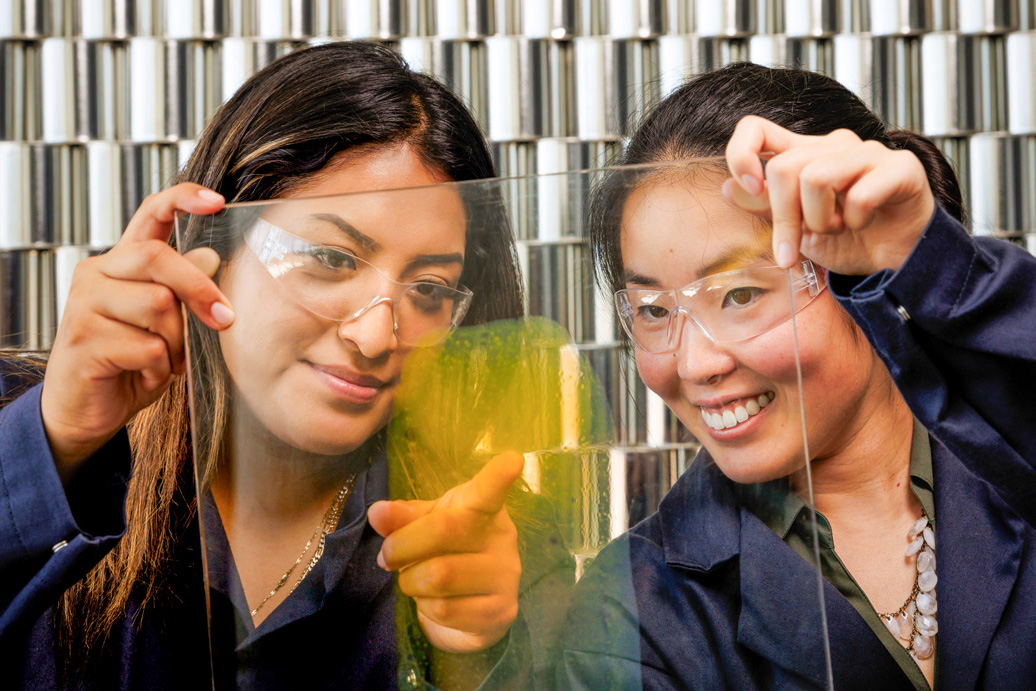
"Molecular Legos" used in groundbreaking research to develop new covalent organic frameworks.
Through groundbreaking work to create a functional, high quality paint pigment, Cal Poly chemistry Professor Leslie Hamachi's research team is working with covalent organic frameworks, or COFs.
COFs are a class of porous, crystalline polymer materials that the team can use to precisely control the size and shape of the pores of the tiny materials they’re working with based on the molecules the team uses to synthesize them.
Hamachi likens the study to creating “a molecular sponge,” which isn’t a technical term, but a descriptive way to visualize what a COF is. Another analogy of their work is synthesis of COFs using “molecular Legos” where “each molecule that we assemble into the COF structure is a Lego piece,” Hamachi said.
We can take advantage of our research opportunities here at Cal Poly and go after some of these out-of-the-box applications.
—Leslie Hamachi
Cal Poly chemistry professor
The idea behind the project is to create a high-quality porous pigment so the porosity of the material doesn't have defects that are blocking the holes of the so-called molecular sponge.
"As a synthetic chemist, I'm really interested in a lot of basic science types of questions: How can we improve the synthesis of these materials? How can we improve the materials quality and their performance?" Hamachi said.
“This project is working well with Cal Poly's Kenneth N. Edwards Western Coatings Technology Center and the polymers and coatings master's program in the Bailey College because there are a lot of students who go on to jobs in the paint industry.”
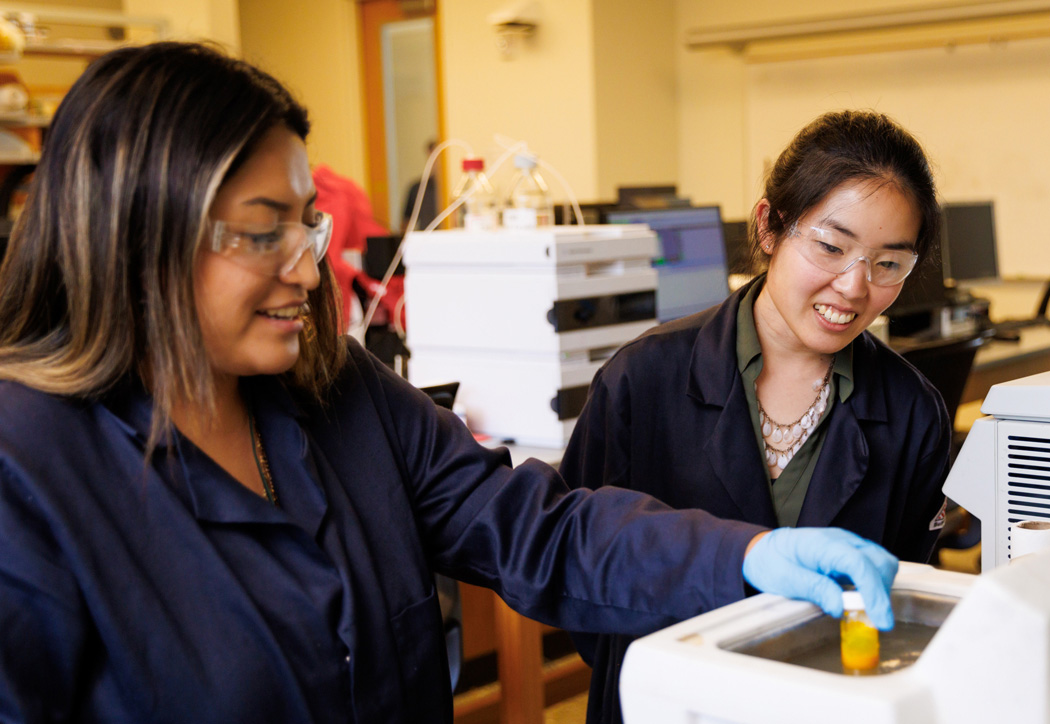
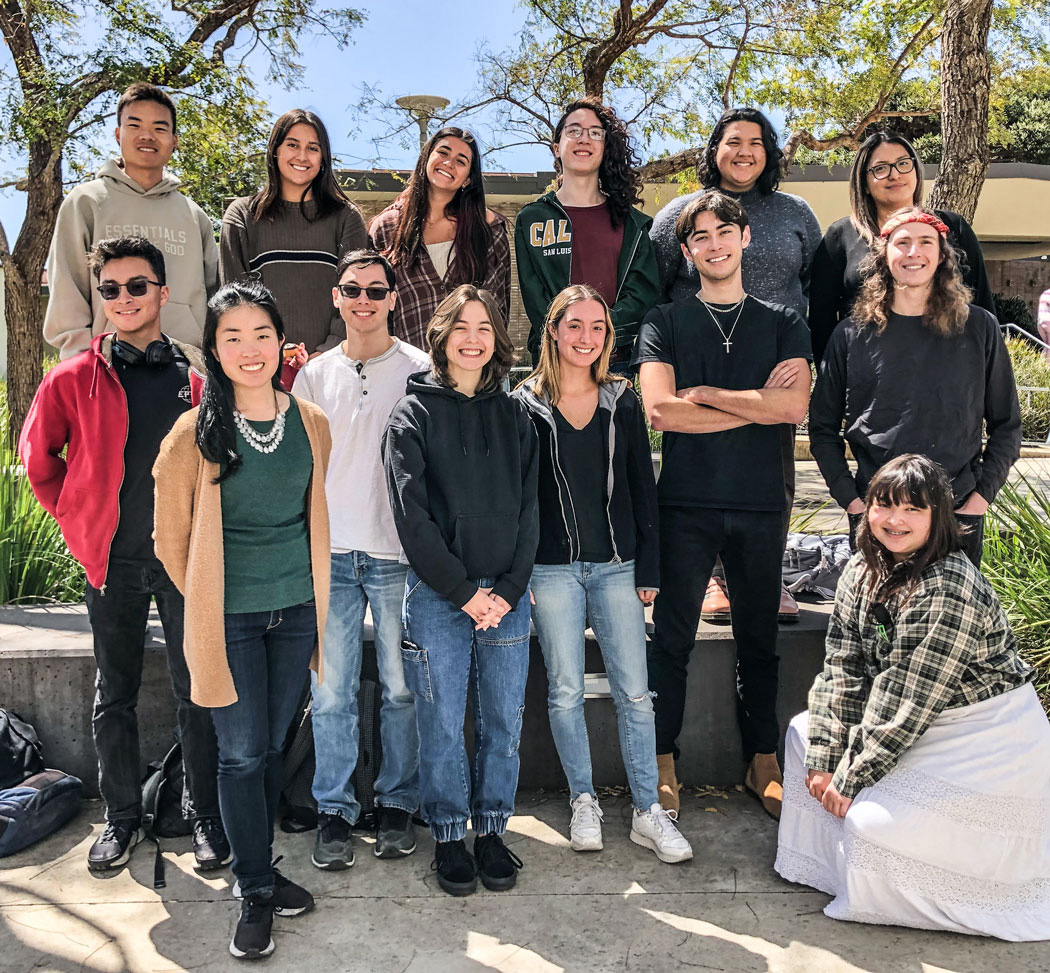
The study is part of the Frost Summer Undergraduate Research Program and includes chemistry, biochemistry and materials engineering students.
Because the material is expensive, it hasn't been used within the paint industry, but it could serve as a useful resource for high-end applications, Hamachi said. The material size is about 1,000 times smaller than a household sponge.
"Nobody has explored the use of this material in the paint space yet," Hamachi said. "We can take advantage of our research opportunities here at Cal Poly and go after some of these out-of-the-box applications."
Cal Poly chemistry student researcher Sachi Ottoes first proposed the idea in 2021 with the concept of creating a functional color-changing pigment that leverages the COFs’ intrinsic porosity.
Chemistry student Estela Osorio-Garcia said she became interested in becoming a Bailey College Frost Summer Research Fellow after attending a campus career fair at which Hamachi and chemistry Professor Shanju Zhang were introducing their work to students.
"I really liked using the instruments in organic chemistry and wanted to be a part of a lab and try research," Osorio-Garcia said.
The Hamachi group's other research foci include sustainable polymers and polymer recycling to mitigate accumulation of plastics in the environment. Projects include investigating Kombucha Leather — a flexible bio-material alternative made from cellulose nanofibrils spun by bacteria and yeast — as an alternative sustainable textile; and studying new classes of reversible covalent bonds that would enable tough cross-linked materials, such as tires, to be recycled.
"Dr. Hamachi really inspires me," said Osorio-Garcia. "She has a lot of projects going on and keeps track of everything extremely well. If I ask a question, she either knows the answer or gets right back to me on it. She's a hard worker and very motivating to students."
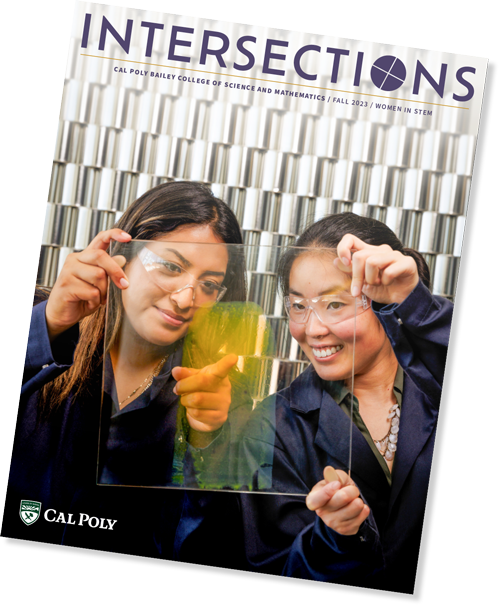
Explore the Full Issue
Published as part of the Fall 2023 Issue of the Cal Poly Bailey College of Science and Mathematics Intersections Magazine.


