
Bailey College Students Earn $15,000 Graduate Fellowships
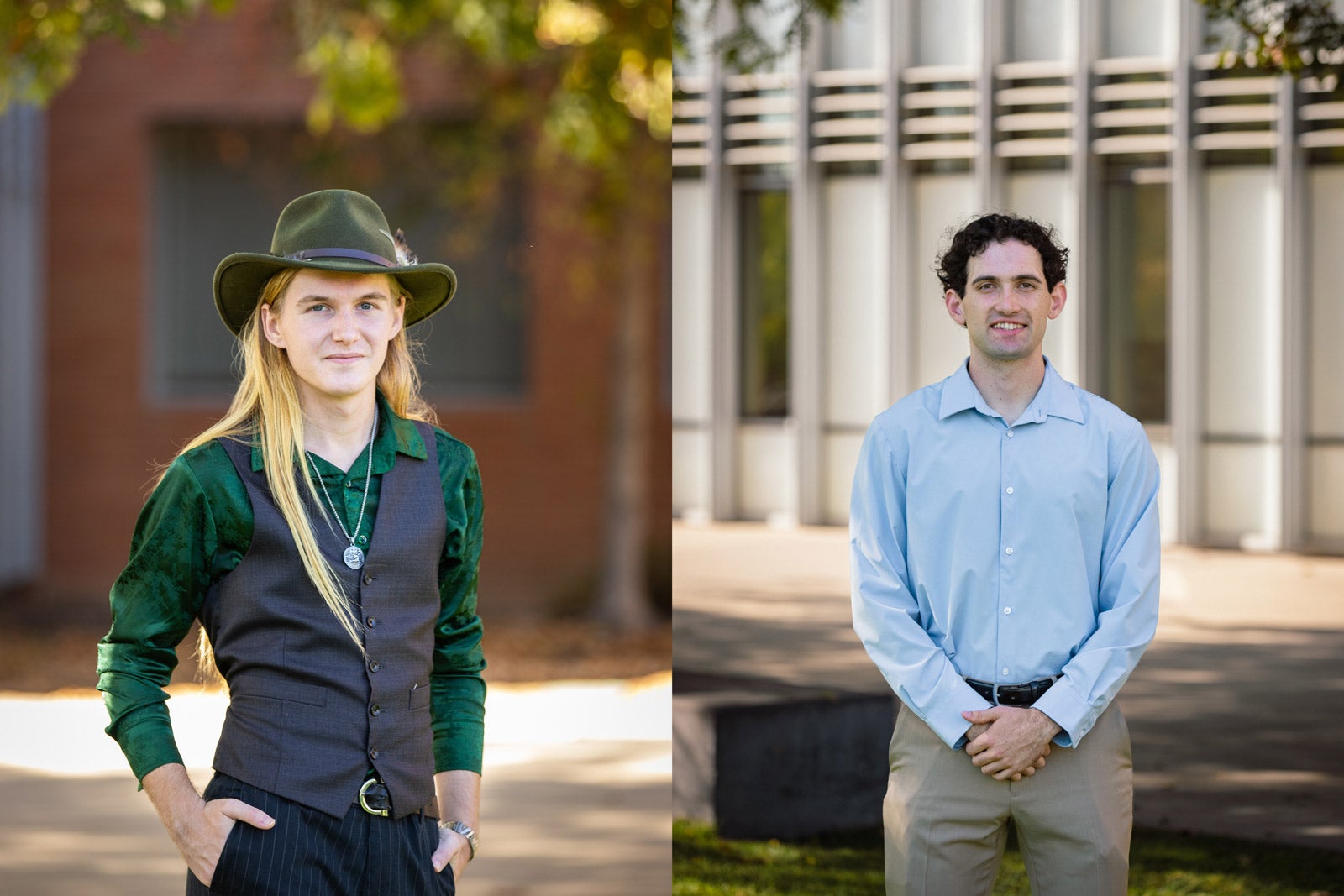
Jackie Ford hopes to conduct research that advances educational opportunities for all and eventually launch her own business.
Carson Neubert plans to study ocean ecology-based statistics and refine statistical modeling techniques useful towards his future career.
Both Bailey College students were awarded $15,000 Cal Poly Graduate Fellowships for 2026-27, allowing them to dedicate time and focus to their research while helping to cover educational costs.
Ford said: “I thought, ‘This is a thing I want to do, and here's a way that I can support myself while doing it,’ and not having to get a job elsewhere that would draw my resources and energy towards that instead.”
Neubert added: ‘This helps me put more of the time that I do have into the research and into my graduate studies. In terms of my furthering my education, this helps so much.”
Graduate Fellowship Program
Funded through Cal Poly’s Graduate Education office, the Graduate Fellowship program supports blended program and graduate students working on research, scholarship or creative activities that are a component of their degree.
Cal Poly students are nominated for the award by a faculty or staff member. Successful applications result in funding awards of either $5,000 or $15,000.
Fourteen Cal Poly students across all colleges received funding awards for 2026-27, including the two Bailey College students.
Student selections are determined by a committee of associate deans and/or their designees each year based on multiple criteria, including funding need and project significance and feasibility. Funds cover two terms.
“Graduate Fellowships offer students important opportunities to further their education and pursue their academic goals and interests,” said Joyce Lin, associate dean with the Bailey College of Science and Mathematics. “I’m pleased that two Bailey College students are among this year’s recipients who will be able to sink fully into engaging work that helps prepare them for future careers.”
Jackie Ford
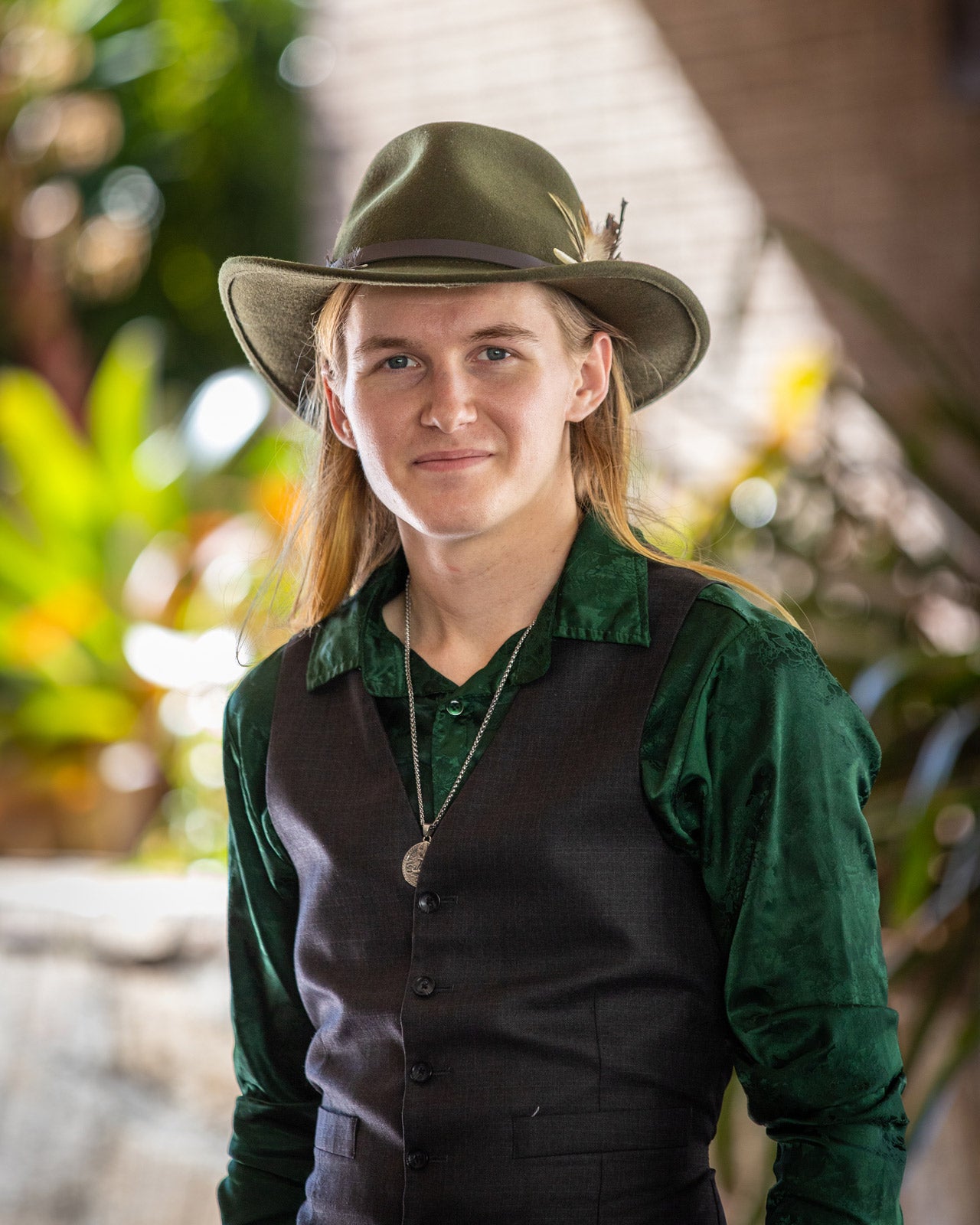
Graduating with a bachelor’s degree in business administration at Cal Poly in June 2026, Ford developed a passion for research and large projects focused on communal benefit, including winning the 2026 Biomedical Make-a-Thon as part of a team conducting prosthetics-related research. And Ford’s senior project as a business student involved revamping sales, outreach and external communications for a non-alcoholic botanical cocktail startup company.
She’s now pursuing a master’s degree in educational leadership and administration through the Cal Poly School of Education.
“My transition into the Education program is one built on a deeply rooted desire to understand and enact better change in the infrastructure people use to learn, and being able to apply from previous academic experiences toward education-oriented research is a dream come true,” Ford said. “I am interested in improving the education experiences of people at any level.”
Working with Education Professor Andrea Somoza-Norton and Biochemistry Professor Anya Goodman on Project CUREOS (Characterizing Undergraduate Research Experiences and Outcomes in STEM), Ford will examine undergraduate STEM-related research experiences at Cal Poly and other California State University institutions to help improve the effectiveness of learning opportunities, including pathways for work students find meaningful. Project CUREOS is supported by the William and Linda Frost Fund.
Ford said her personal experiences as a student have inspired her to dive into the work.
“I’ve had my fair share of struggles through many years of education of trying to do things that felt like the infrastructure was set specifically against,” Ford said. “I often felt a lack of autonomy in being assigned a project with limited choices about how to proceed. I would have an entirely different idea of something I felt that was not only relevant but could enact effective change.”
During her project-based experiences at Cal Poly, Ford started to find more instructors willing to allow her flexibility on projects so that “even if it meant I had to take on more work, they would inform me of that prior, and not just kind of throw me in the deep end.”
“I was very fortunate in that I developed close relationships with supportive Cal Poly faculty members, and I know that not everyone has that,” Ford said. “I want to be able to make that a more widespread experience.”
Project CUREOS explores how experiences shape student learning, development and engagement, addressing questions around student autonomy and approaches to learning.
“I’ll be doing a lot of the analysis of the different data we’re going to be assessing,” Ford said. “Part of my job will involve recruitment in finding people who participated in undergraduate research experiences, through different interviews and questionnaires, so we can understand what aspects they feel were the most effective and resulted in successful outcomes.”
The work will involve hundreds of cases and quantitative and qualitative analysis, including analysis of Qualtrics surveys.
The research will be informative for her career as Ford has a long-term goal to operate an educational nonprofit focused on arts-based learning.
“The idea of the nonprofit would be to serve lower- to middle-income families and students of all ages interested in art, either pursuing it as a career or just in general, enjoying the act of creation,” Ford said. “The main goal is to lower the cost of entry into various mediums, allowing people to pursue their interests without restrictive costs for materials and course fees. If we could drop that price exponentially by making it more communally focused, with sets of communal tools, communal resources, and people willing to volunteer their time and teach classes, I feel like that could do a lot of good for a lot of people.”
Ford, who also has served as a Cal Poly Housing resident advisor and a Mustang Move-in lead, admittedly faced financial challenges as an undergraduate and chose to expedite her graduation date because of it.
“Truth be told, I barely got through my undergraduate program from a financial perspective, and if I didn’t push myself to graduate a year early, I likely wouldn’t have been in a position where I could attend this Master’s program,” Ford said. “Without this fellowship, my program pursuits would have had to be less intensive so that I can make time for working part-time, but likely full-time, outside of school to continue to afford the necessities, diminishing not only my contributions, but my experience within the program.”
Carson Neubert
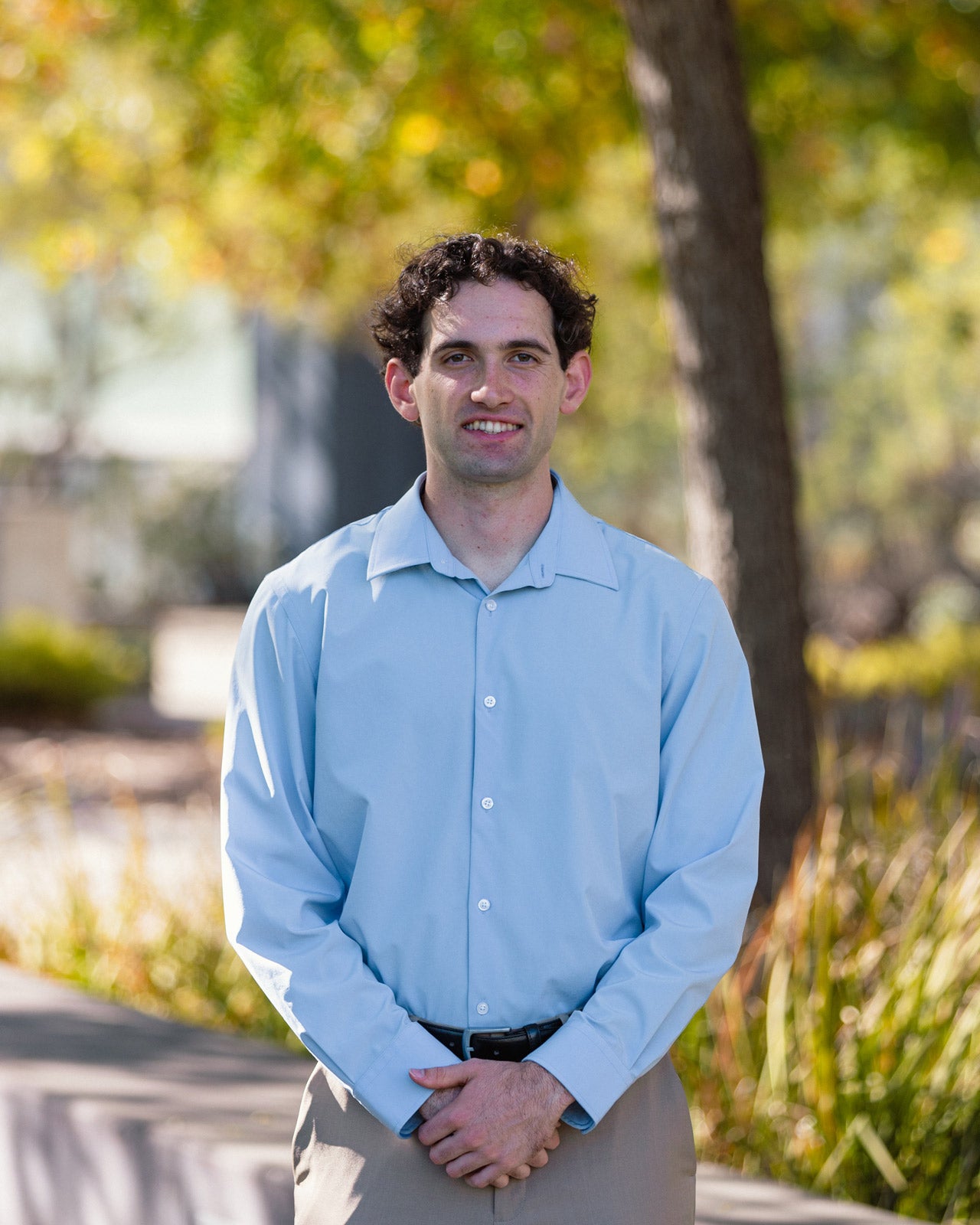
As a Blended BS+MS Statistics Program student, Neubert said he appreciates his fellowship opportunity, which will help fund continued research he began as an undergraduate.
Neubert has worked closely with Statistics Professor Trevor Ruiz as a student research assistant to estimate ecological association networks from microbial community data, a focus of his graduate research. He started the work last spring and continued it over the summer in the Frost program.
Starting in his second year as an undergraduate Cal Poly statistics major, Neubert served as a part-time instructional student assistant, grading in-class assignments, homework and projects to help cover educational costs. Now, he’ll be able to dedicate more time to his research.
“I’m very grateful for this opportunity,” Neubert said. “It’s super helpful to put more of the time that I do have into the research and into graduate work. I enjoy grading and tutoring, but in terms of furthering my education, this helps a lot.”
The research uses statistical methods to examine DNA samples from ocean water to determine which types of microbes are present, including collections from cruise ships through the Global rRNA Universal Metabarcoding of Plankton database, consisting of 1,194 seawater samples collected across all five major ocean basins between 2003 and 2020.
Another data set includes seawater samples collected off the Central Coast about 50 miles from Santa Barbara. The work helps them understand which microbes tend to exist under certain conditions, including temperature and salinity. With the predicted El Niño climate pattern ahead in 2026-27, the research team has studied microbial presence under heat wave conditions.
“Over the summer, we looked at a heat wave in the Pacific and observed how networks change,” Neubert said. “Plankton can affect the entire food chain, so it’s important to look at what’s happening and plot the presence of networks at different temperatures.”
Neubert said the team has used specialized statistical models designed to study ecological association networks using genetic sequencing data. They applied a technique called the joint graphical lasso to estimate multiple related microbial networks.
“I've been modeling the network along a temperature gradient to capture changes continuously as temperature increases,” Neubert said.
While their project focuses on ocean microbes, similar network-analysis modeling could apply to a wide range of systems, including gut microbiomes, social media networks, financial trends and more.
The exploratory nature of the research appeals to him.
“I think the main thing is to get more comfortable doing open-ended research,” Neubert said. “In my classes, a lot of the time, the professor will give you a project that includes a list of what you need to do and what your output should look like. There really isn’t a lot of free range. But with the research, for the first time, I would be talking with the professor, and he would ask me what to do next.”
For more information about the Graduate Fellowship program, contact Joyce Lin, Bailey College’s Associate Dean for Student Success, Inclusive Excellence and Curriculum, at jlin46@calpoly.edu.


