New Pathways to Teaching Residency Program
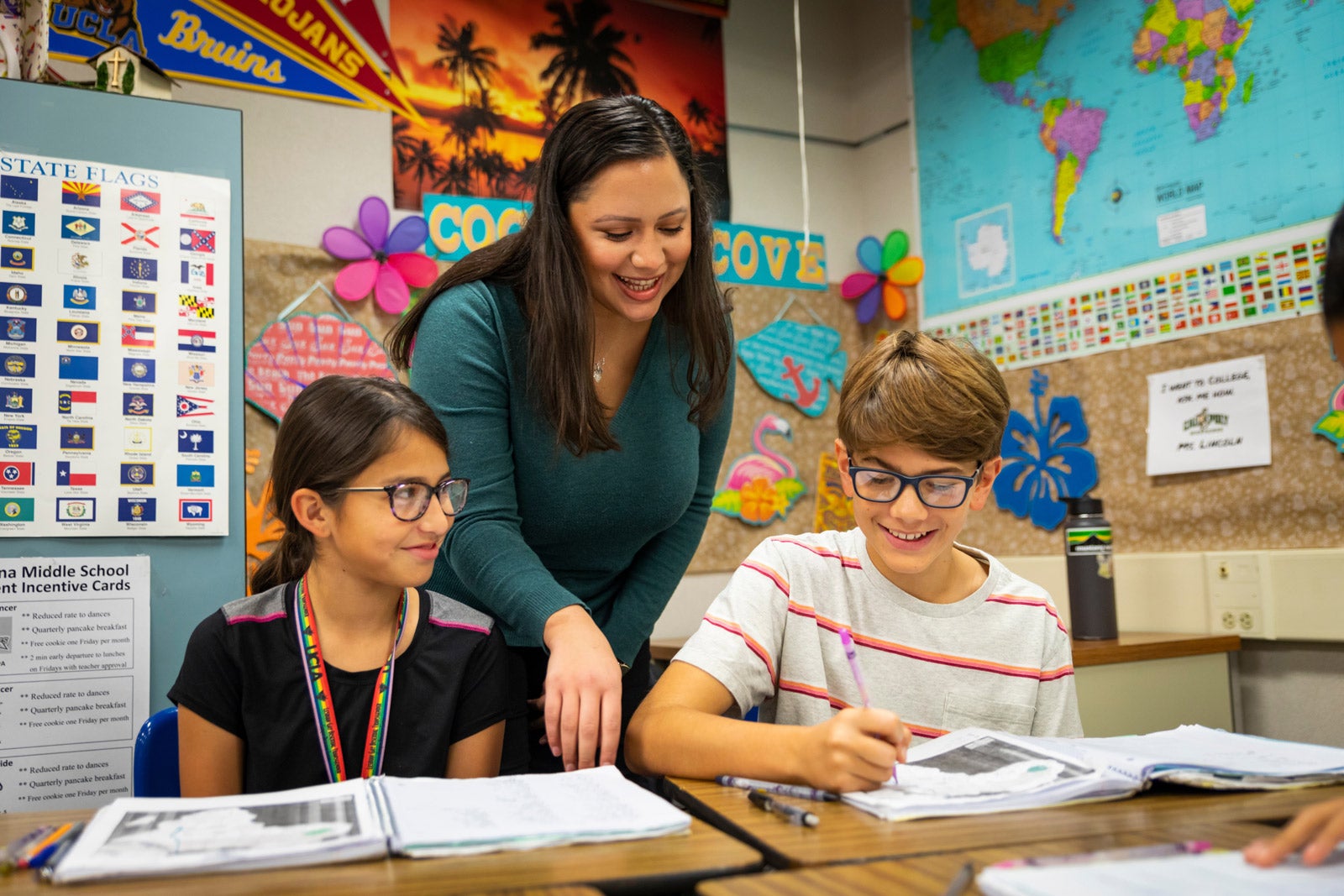
A new teaching credential program serving prospective student-teachers and schools in the Santa Maria area has been launched through a partnership with Cal Poly.
Applications are now open for the Pathways to Teaching Residency Program through Nov. 1.
The Cal Poly/Northern Santa Barbara Residency program, funded through a $3.2 million California Commission on Teacher Credentialing grant, allows candidates to complete a Multiple Subject (Elementary Education) teaching credential and supplemental authorization in a year-long student teaching placement in the Santa Maria Bonita, Orcutt Union or Guadalupe Union school district.
"This grant funding will help meet the teaching needs of local schools and provide opportunities for those seeking a career transition," said Megan Guise, director of Cal Poly's School of Education. "This will make an impact in the lives of students and working professionals on the Central Coast."
Classes will be held at night in Santa Maria while students complete a year of student teaching and commit to teaching for at least four years in a participating district. The program requires a bachelor's degree prior to enrollment.
Enrolled students receive a stipend of $33,000 to cover tuition and living expenses. Other benefits of the program include part-time employment during student teaching.
The model follows the workforce preparation example of medical school, also called a residency, in which trainees serve on site with physician mentors. Pathways to Teaching Residency Program candidates will be placed in a K-6 classroom, serving alongside a mentor teacher. A Cal Poly supervisor also will provide guidance.
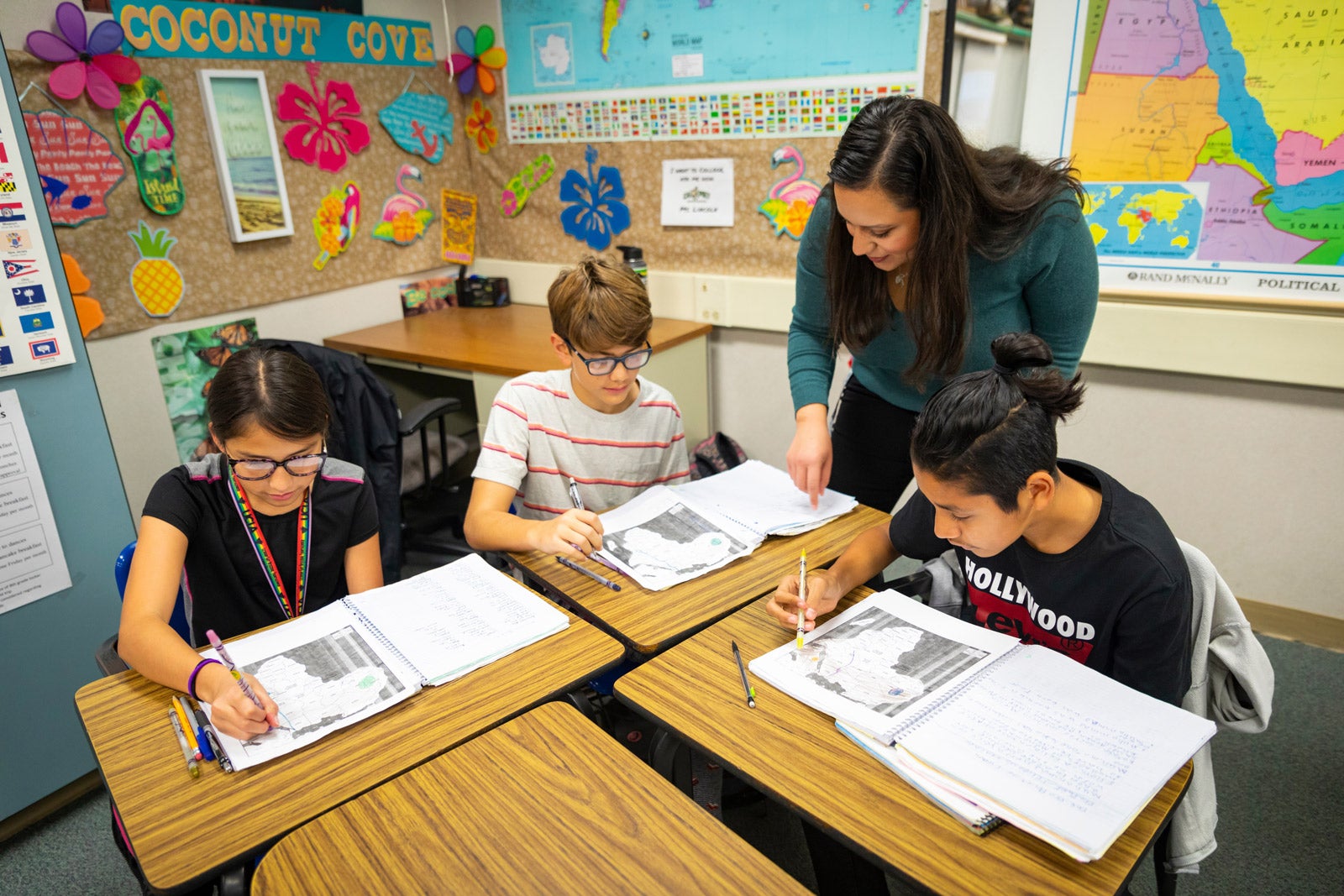
“As a resident teacher, you are in a K-12 classroom from the start of the year until the end of the year with a mentor teacher,” said Briana Ronan, a Cal Poly education professor and program lead. “This program is different than most other types of teacher preparation programs. Typically, credential students must complete coursework before they can go into the classroom. In this model, you’re in the classroom nearly full time from the beginning through the full school year.”
Cal Poly faculty in education will serve as program instructors. Online classes will begin in January 2027 for students who must take prerequisite courses (those who have completed those requirements may have those courses waived). Credential coursework will be held in-person in Santa Maria two nights per week in the fall semester starting in August 2027 and the spring semester commencing January 2028.
With teacher shortages in Northern Santa Barbara County schools, specifically for areas of bilingual education in STEM and other specialized areas of instruction, the program will help fill educational gaps while setting up program students for future work.
“This program opens up a pathway that makes it affordable to earn a teaching credential, while simultaneously securing employment for the four years that follow the program,” said Jess Jensen, a Cal Poly education professor and a program co-coordinator. “It’s truly a game changer. Teacher recruitment is always an issue, and on top of that, multiple of our partner districts are moving to departmentalized upper elementary classes.”
Departmentalized upper-elementary classes are classes — usually in grades 4–6 — where students switch teachers for different subjects rather than staying with one teacher all day.
For example, one teacher might teach math and science, while another teaches English language arts and social studies. It’s meant to give teachers deeper subject focus and help students begin adapting to the class transitions they’ll experience in middle school.
“This grant awarded for the partnership program builds an opportunity for pre-service teachers to specialize in a content area, which will ultimately help these districts recruit and train for those hard-to-fill, specialized teaching positions,” Jensen said.
Applications may apply to the program here (under Box 11).
For more information about the program, click here.


