
Amid Funding Cuts, Women's Mobile Health Needs Your Support
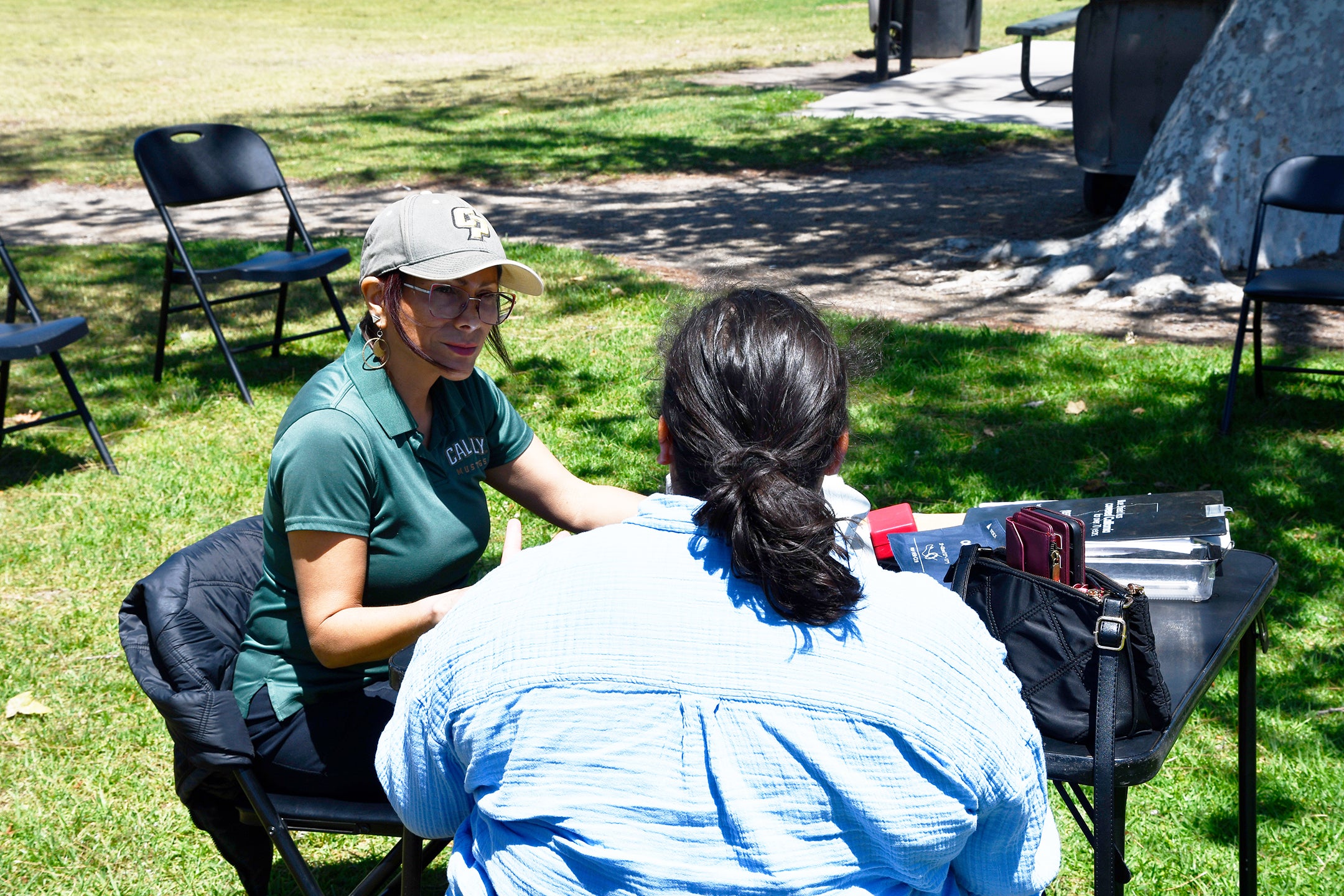
The Women’s Mobile Health program has been serving low-income and uninsured patients in Northern Santa Barbara County since 2019, but funding constraints have reduced program hours as of this summer.
The program now is seeking donations from the community to help continue the breadth of its services (donations can be provided by clicking on the link here).
Partnering with the nonprofit SLO Noor Foundation, the Cal Poly program operated by the Center for Health Research, has a mission to provide free medical and preventive health care to women who lack access to high-quality medical care.
As of June 2026, the clinic had served 1,388 patients over its seven-year existence, using funding from private donations, local nonprofits and health research grants. Starting in June, the clinic has reduced its services indefinitely from weekly to monthly visits in the community.
Women’s Mobile Health meets patients near where they live, parking a mobile health vehicle close to where local residents walk to appointments or catch the bus or a ride from a family member. Services include annual exams, Pap smears, pregnancy care, cholesterol testing, mental health care, cancer care, blood pressure and blood sugar monitoring and more.
Suzanne Phelan, the Women’s Mobile Health director, said the funding shortfall comes during a difficult period, with free and charitable clinics across the state competing for a shrinking pool of resources.
“It’s just unfortunate timing, because it’s a time when there’s a heightened need for these types of services, but less resources,” Phelan said. “We’re doing really life-saving things, and we're having to reduce services due to funding.”
Community Impact
Services have been offered in Santa Maria and Guadalupe during the program’s impactful history. The Mobile Unit is currently operating only in Santa Maria due to the reduced hours from funding shortages.
While nearly 1,400 individual patients have been served by Women’s Mobile Health, that number does not capture the thousands of phone calls, follow-up conversations, educational encounters, referrals, care coordination efforts, and moments of encouragement during tough times.
“We’ve developed relationships that extended well beyond clinic visits,” said Cristina Macedo, the bilingual program coordinator. “We became a familiar face, a trusted resource, and sometimes simply someone who patients knew they could call when they felt overwhelmed. Every patient represented a relationship, and every relationship represented an opportunity to make healthcare a little more accessible, understandable, and compassionate.”
Many of the clinic’s patients work in the agricultural fields surrounding Santa Maria, harvesting strawberries, cauliflower and wine grapes.
“Many of our patients have carried extraordinary burdens,” Macedo said. “We’ve met women who had experienced severe trauma, including witnessing the murder of family members or surviving sexual violence during their lives. Sometimes what they needed most was someone willing to listen without judgment.”
Phelan said farm work carries occupational hazards: intense heat, pesticide exposure and chronic back pain, while the cost of care and long working hours make it hard for these women to access health services.
"These are hardworking women picking the food that we all eat," Phelan said.
Phelan noted the irony that many of the women harvesting the region's produce struggle to feed their own families: “The people picking our food, 23% of them have food insecurity themselves. That’s sad, but we're doing something about it. We’re educating people and connecting them to food pantry resources.”
Clinic Experiences: Excellent Care, Welcoming Medical Staff
A 59-year-old Spanish-speaking patient, who asked to remain anonymous but shall be called Maria as a pseudonym, said that she first came to the Women’s Mobile Health unit after seeing the van parked in her neighborhood in Santa Maria.
At the time, Maria’s knee was bothering her after long days working in the fields picking produce. Maria felt very comfortable and welcomed by Women’s Mobile Health staff, learning that she wouldn’t be saddled with unaffordable medical costs and her treatment with a Spanish interpreter was helpful to her long-term health. The woman has visited the clinic regularly for the past six years.
“Because it’s expensive to pay for medical care, it has really helped me,” Maria said in Spanish. “Not only did I receive excellent medical care, but they also gave me information about food assistance (through another local food support program). They provided food such as beans and other groceries.”
Macedo said the clinic’s goal is to help people use food and lifestyle changes before they need medications. In Maria’s case, she reduced the number of tortillas, with high levels of carbohydrates, that she was eating. She replaced them with more vegetables, along with eating less sugar, losing weight in the process and lowering her risk of contracting diabetes.
“Honestly, everyone there felt like family to me,” Maria said. “The nurses, the doctors—they all knew me and knew my medical history. They understood what I had been through. One thing I don't like about doctors in general is that appointments are usually rushed. Here, I feel like they actually take the time to listen.”
Maria said that she still has health problems, but they've helped her manage them.
“I have a little high cholesterol now, but it's under control,” she said. “Otherwise, I don't know what I would have done.”
Another 59-year-old Santa Maria woman (pseudonym Mia) learned about the clinic from a Facebook announcement. A single woman, who has worked off and on in the nearby agricultural fields, lacking insurance, Mia had gone two to three years without seeing a doctor, coming in to the Mobile Health Unit initially for a check-up after feeling anxious about her health, not knowing what her condition might be.
“One thing I really liked about the clinic was that whenever they did my lab tests, they would call me and explain the results,” Mia said. “Then, if I needed medication, they would prescribe it, and afterward they would call again to see how I was feeling. That’s what I really appreciated.”
Cal Poly Students, Program Coordinators Inspired to Help
As the program provided services, it also offered opportunities for Cal Poly research, including training students pursuing careers in public health, medicine, and academia. Cal Poly research has included studies in maternal health and obesity, sexual and reproductive health and mobile health care.
The Women’s Mobile Health clinic has contributed to help Cal Poly researchers collect data and assess a wide range of public health concerns.
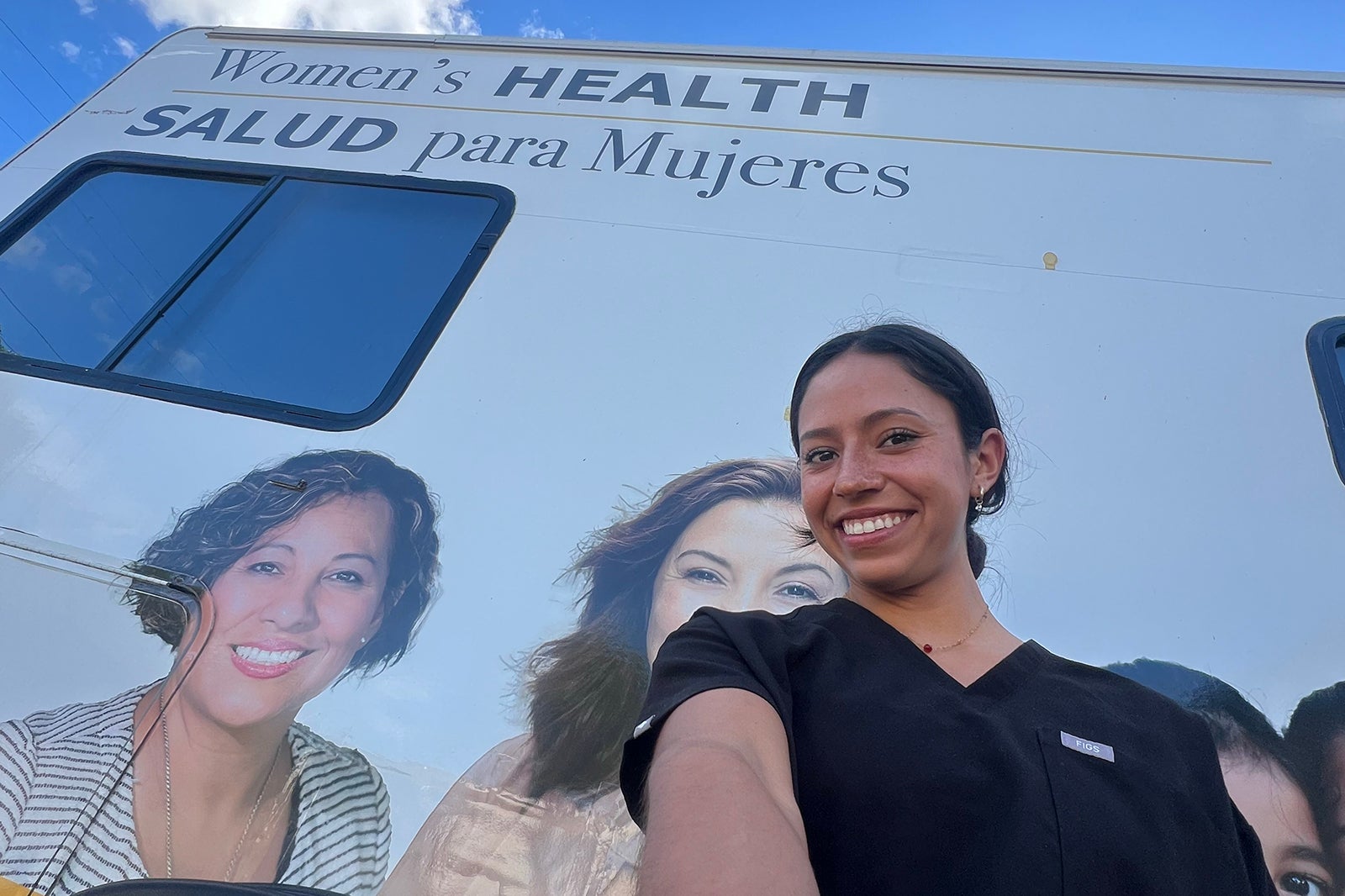
“Volunteering with the Cal Poly Women's Mobile Health Clinic has been an incredible learning opportunity for me,” said student Isabel Sanchez (Agricultural Science, ’26). “It inspired my goal of pursuing a career as a physician assistant and even influenced my senior project, where I studied the effects of pesticide exposure on women and children in agricultural communities. The clinic also gave me valuable hands-on clinical experience taking vital signs such as heart rate, height, and weight, while showing me the importance of providing accessible, compassionate healthcare to underserved communities."
Sanchez added: “Beyond developing clinical skills, I became part of a community outreach effort that helps improve access to healthcare for local families. Seeing the impact the clinic has on patients strengthened my commitment to a career in healthcare and inspired me to continue serving through similar community-based programs."
Additionally, students participating in CHR research projects can receive course credits for their participation.
Those training to work on the mobile health unit enroll in the Health Ambassadors course, which introduces health education and promotion strategies through participation in community-based activities and/or as assistants on faculty-led projects.
Women's Mobile Health has proven that compassionate healthcare is about much more than medicine.
“It is about showing up, building trust, and reminding every person who walks through our doors that they matter,” Macedo said. “We hope this is not the end of the story, but the beginning of its next chapter.”
To give to Women’s Mobile Health, click here.


