Hands-On STEM Program Sparks New Ways for Kids to See Their Future Selves
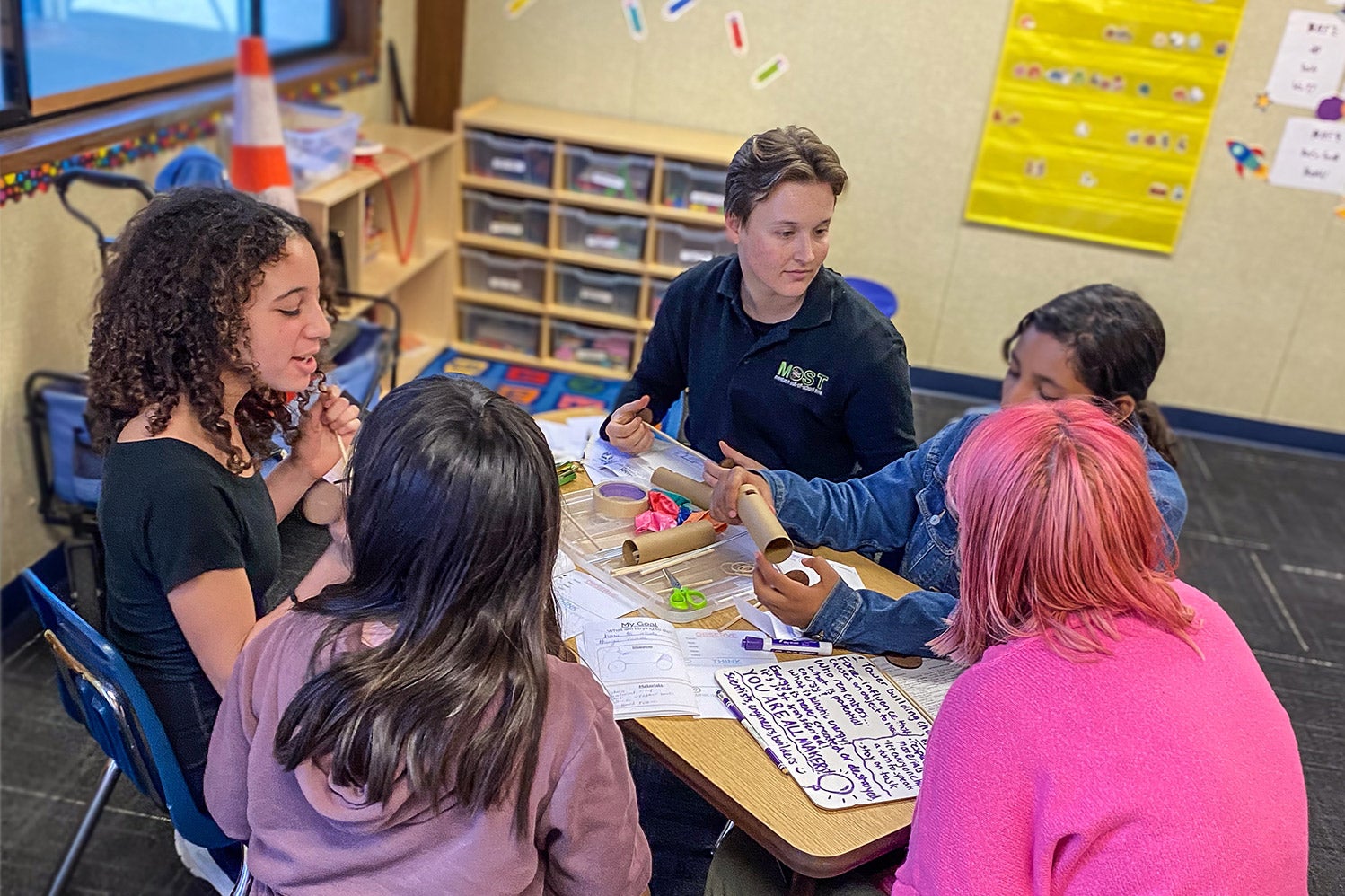
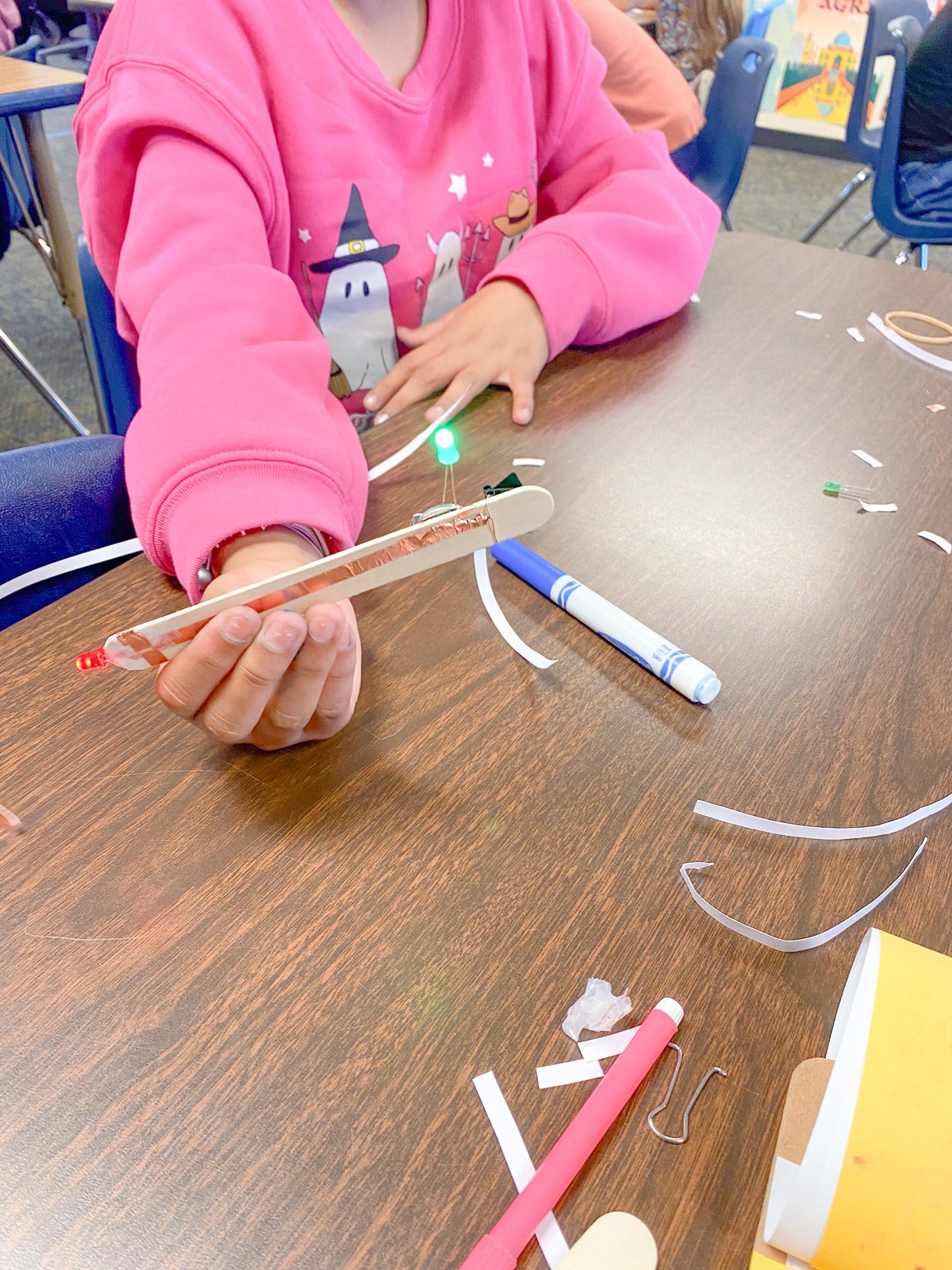
By the time a fourth grader at Grover Beach Elementary completes building a paper circuit for the first time and watches an LED bulb flicker on, it’s not just the light that turns on.
“Guess what we did today?” Bella Contreras, a Cal Poly education master’s degree student, would tell her students at the end of each session. “We were engineers. We were scientists.”
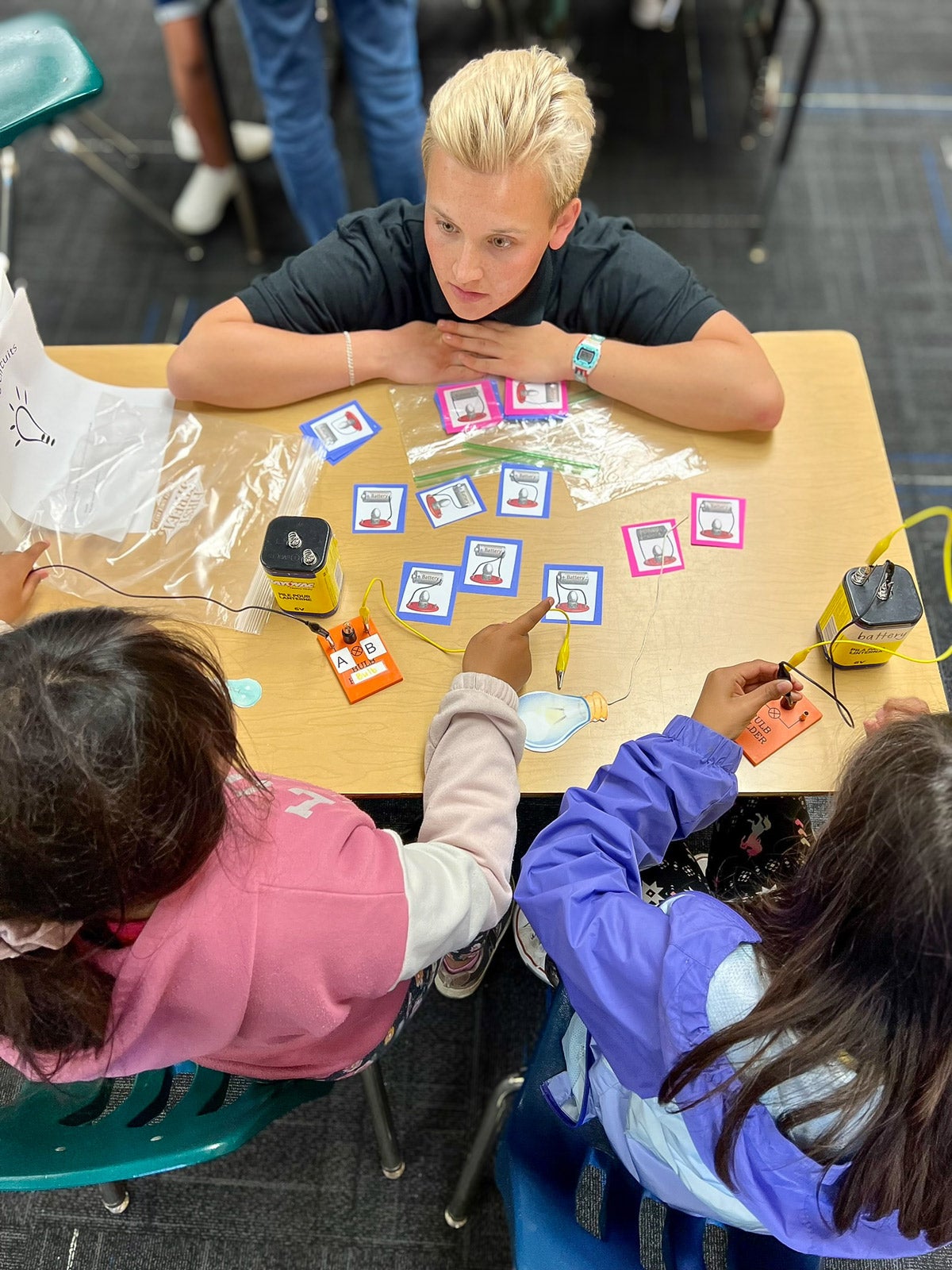
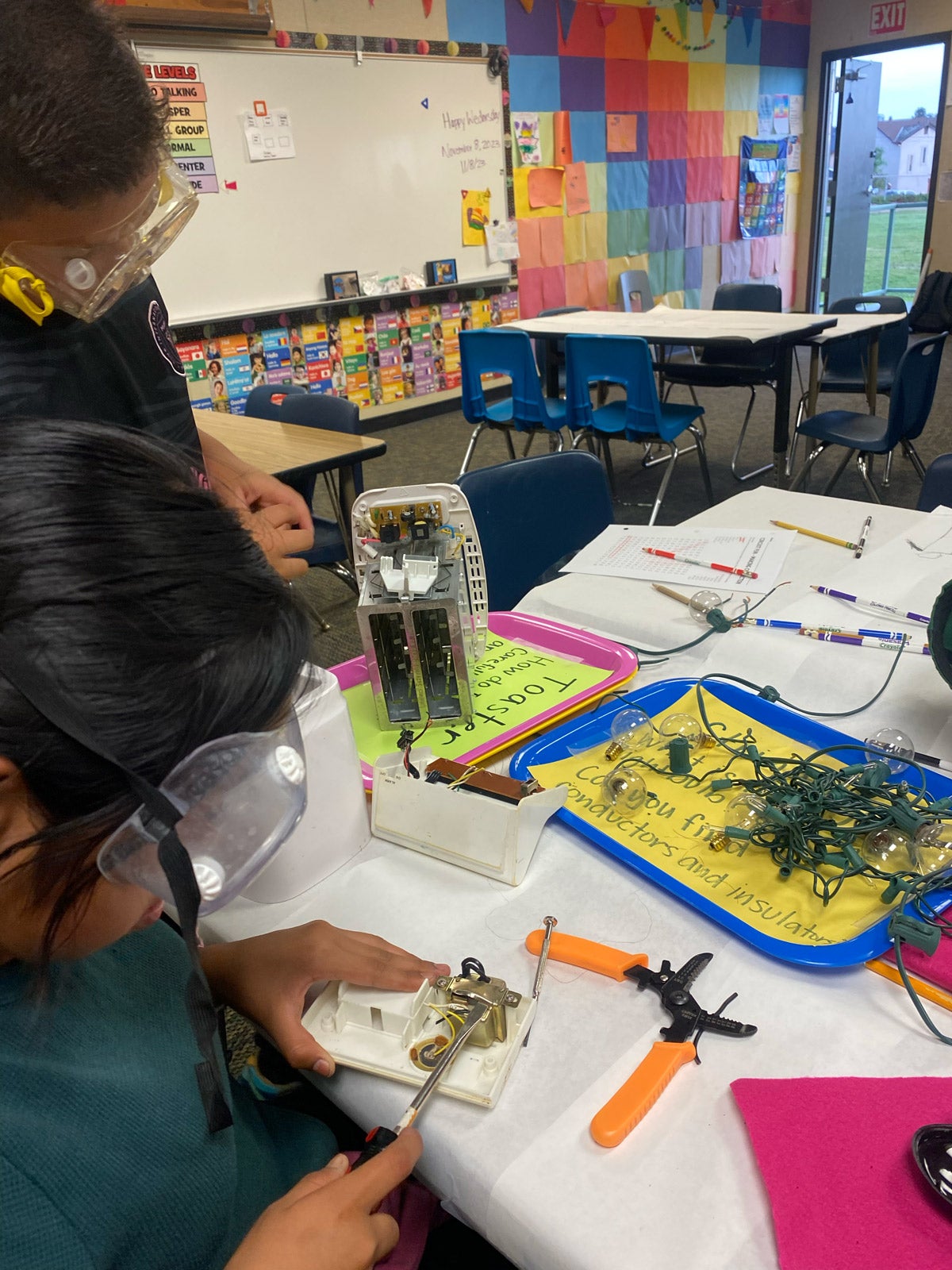
That moment of reframing, or shifting perspective, so children see themselves as engineers before they've ever thought to call themselves one, is at the heart of Cal Poly's Mobile Making program. The program is a university-community partnership that sends Cal Poly undergraduate students into local elementary schools to facilitate hands-on science, technology, engineering and math (STEM) activities for children in grades three through six.
Activities include designing mini roller coasters, pinwheels, flashlights, lava lamps, spinning tops and catapults. Their paper circuit project used copper tape, LED bulbs, and coin cell batteries.
Cal Poly’s service-learning course, called Mentors in Out of School Time (MOST), led by Cal Poly School of Education Lecturer Kristin Bridgeford, has offered service-learning curriculum for the past decade. Participants spend the first half of the term with Bridgeford, learning both the content and the pedagogy behind teaching. Halfway through, they join partner school sites on Thursday afternoons to lead sessions with young students, including Mobile Maker program work.
Contreras and Bridgeford stress how important early STEM exposure is. Quality science and engineering experiences during elementary and middle school are crucial for students' long-term interest and achievement in STEM fields, they explain. Yet many K-8 teachers report low confidence in their ability to teach those subjects.
The Mobile Making program tackles that problem from two perspectives: it builds STEM confidence in future teachers while simultaneously delivering hands-on experiences to students who might otherwise never encounter them.
Our goal was that we made a relationship. They saw what a college student looks like and who they are, and maybe thought, ‘I want to go to college too.’
— Bella Contreras, Education master's student
The program includes local schools such as Grover Beach Elementary, Oceano Elementary, and Fairgrove Elementary, serving predominantly Latinx, working-class communities on the Central Coast. Many of the students’ parents didn’t attend college, and careers in STEM may feel remote. “Elementary students are developing interest in STEM and a belief in their own abilities to engage in these topics alongside the undergraduate facilitators who are developing their own beliefs and abilities to engage in STEM teaching,” said Jess Jensen, a professor of elementary mathematics education at Cal Poly.
“Our goal, if we didn't teach them anything about science or making, was that we made a relationship,” Contreras said. “They saw what a college student looks like and who they are, and maybe thought, ‘I want to go to college too.’”
The program includes service-learning courses (combining coursework with community service) at Cal Poly, open to students of any major. Participants spend the first half of each quarter in class with Bridgeford, learning both the content of maker projects and the pedagogy behind teaching them. Beginning around Week 5, they head to partner school sites on Thursday afternoons to run sessions with elementary students.
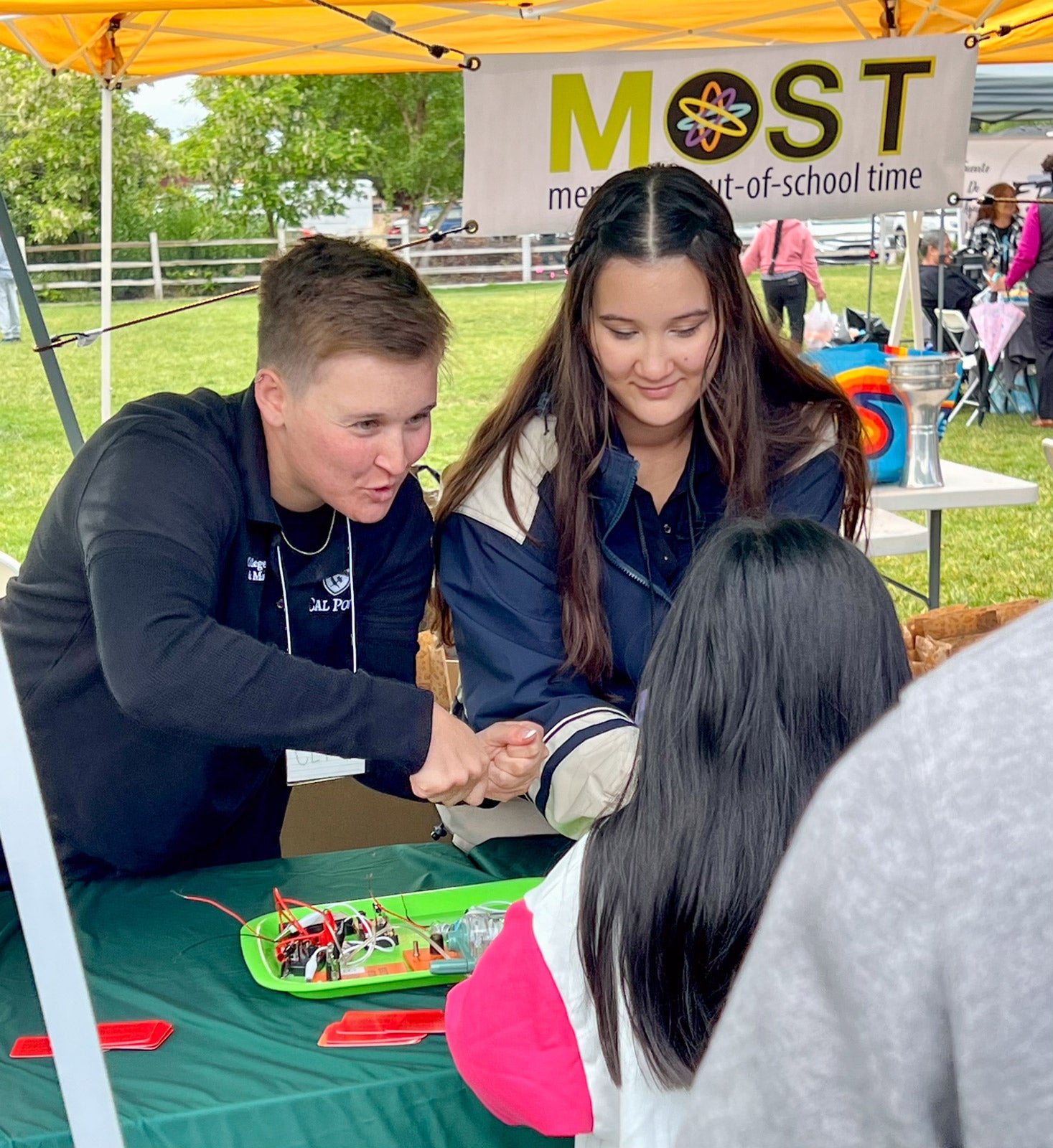
A maker’s space, Bridgeford is quick to point out, doesn't require a specialized room, saying: “It's really a hands-on learning zone, and it can be anywhere: in a classroom, outside on the playground, even at a farmers market.”
The program has taken place in all aforementioned locations. Events include a Día de los Niños celebration with 16 Cal Poly mentors, and a recurring “Makers at the Market” series at the San Luis Obispo Farmer's Market.
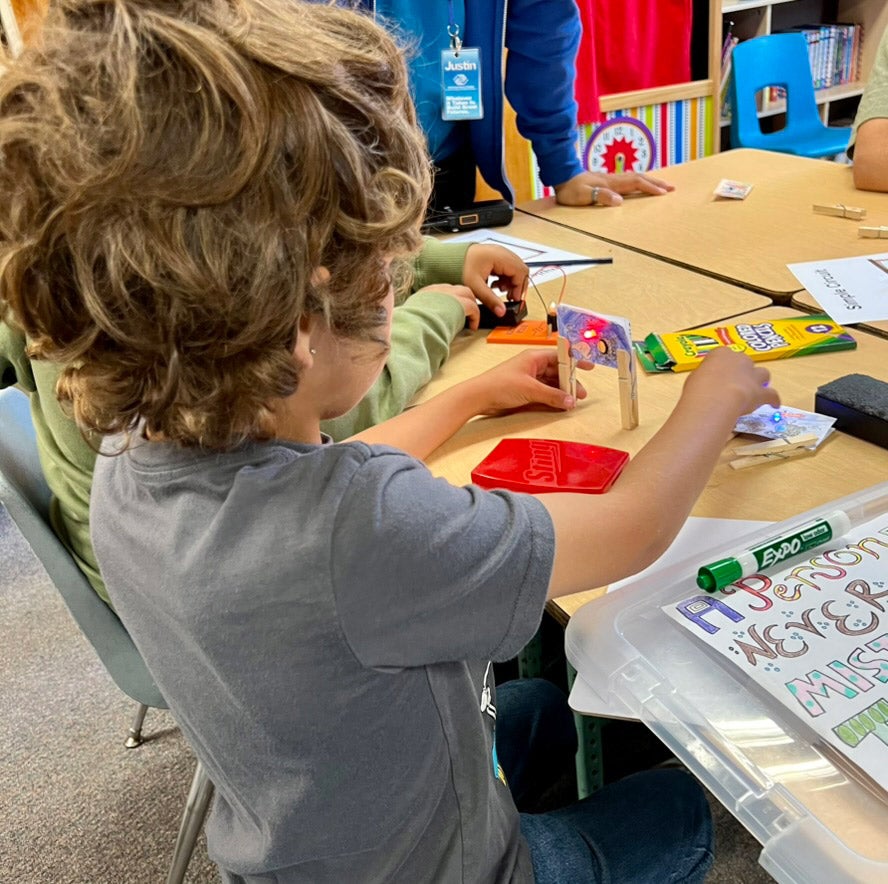
More recently, the program has incorporated “novel engineering,” in which the engineering challenge is woven directly into a book the class is reading. Fourth graders reading the book “Esperanza Rising” were tasked with designing solutions to problems facing the story's main character, Esperanza, who is their “client” and the students are the engineering firm she’s hired.
One of the program's most consistent findings is the role that productive failure plays in learning, for both elementary students and the Cal Poly undergraduates alike.
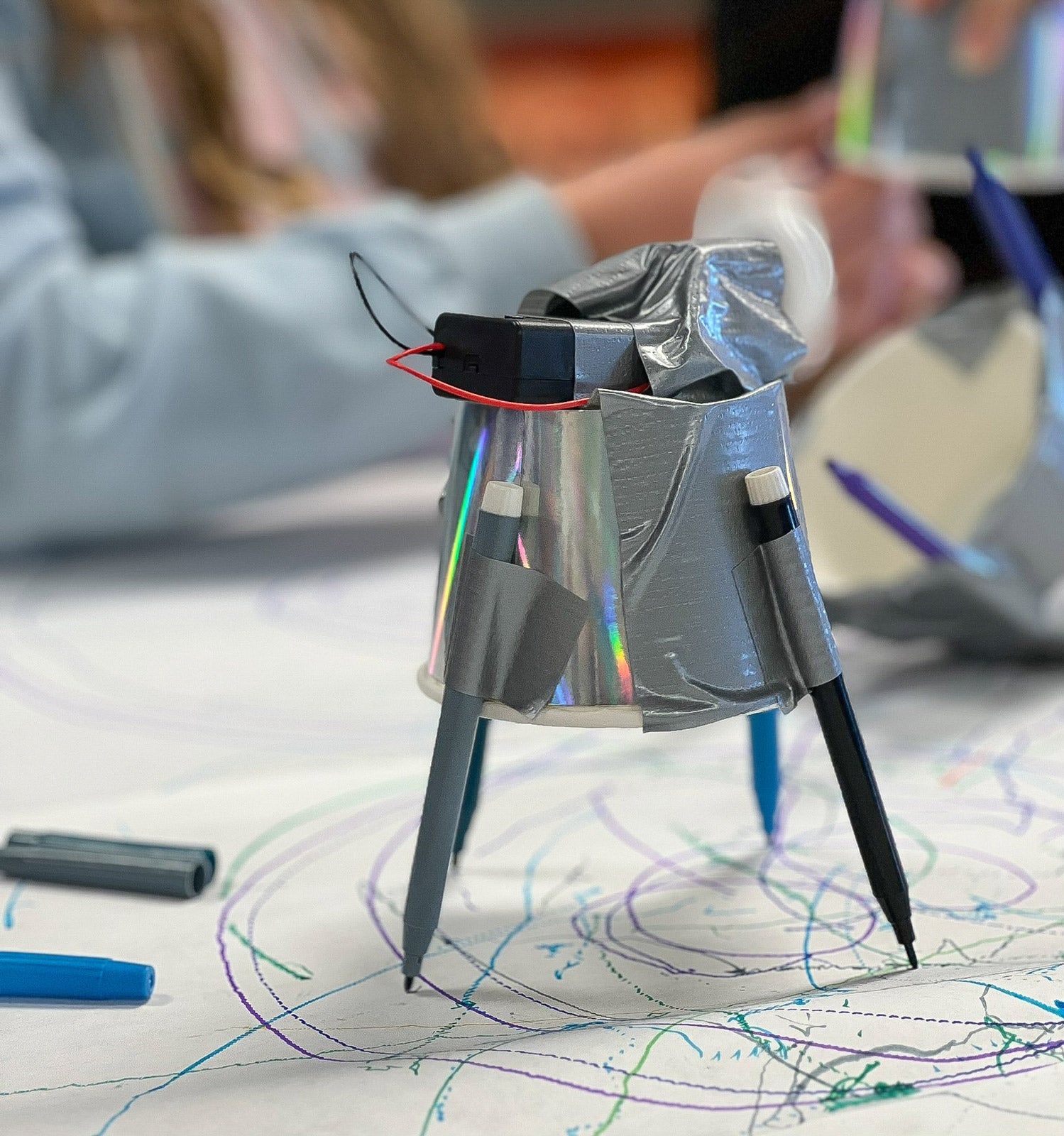
“We don't go there with the answers,” Bridgeford said. “We help them explore, get a little bit frustrated, provide encouragement so they’re not going to give up, and then try again.”
Contreras, who went on to become the program’s STEM Ambassador, described how that philosophy played out in her own development.
“I did not have a growth mindset when it came to STEM,” she said. “I was nervous. But I went in for the first day and it really hooked me.”
Over roughly two years of participation, Contreras came to see failure differently by “going through different school sites, continuing to do maker projects, continuing to fail and adapting that growth mindset, and knowing that failure is part of the road to succeeding.”
That shift had measurable effects. In a capstone class, undergraduate students were asked to line up based on their confidence in teaching science. Contreras found herself at the front.
“I ended up the first person in line,” she said. “And just thinking how this program made me open to the ideas of failure was so valuable. A lot of the people in my major classes weren't that comfortable with the idea of working through failure yet.”
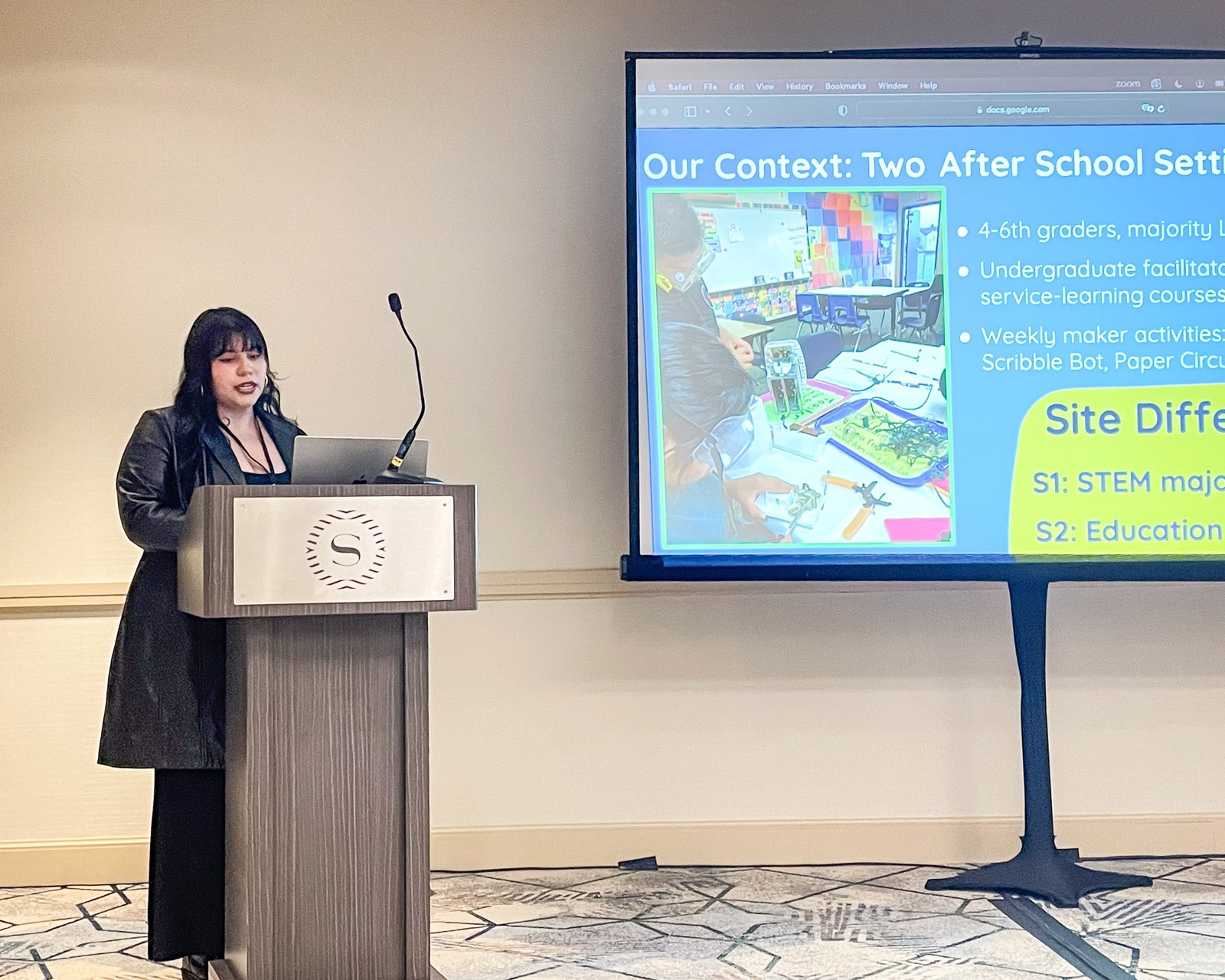
A recently published research article titled “From Makers to Mentors,” co-authored by Contreras, Jensen, Jasmine Nation (a Cal Poly liberal studies professor) and others, examined the experiences of undergraduate facilitators who participated in the program multiple times. The study used a framework focused on two identities: teacher identity and STEM learner identity.
The study highlighted a key distinction between productive and unproductive failure. For example, young students struggling with fine motor skills while manipulating copper tape (a difficult material for small hands) became frustrated. Recognizing those moments and adapting accordingly was a skill that mentors developed through repeated experience. The takeaway included striving to be intentional with language to provide proper support.
“By trying out the same activity multiple times, and improving it each time, facilitators reported developing more confidence,” the article noted. “Throughout our study, facilitators consistently emphasized the importance of implementing and modeling a ‘growth mindset’ for both their students and themselves as facilitators. Focusing on failure as a natural component of learning made activities more engaging for students, because no idea was off the table.”
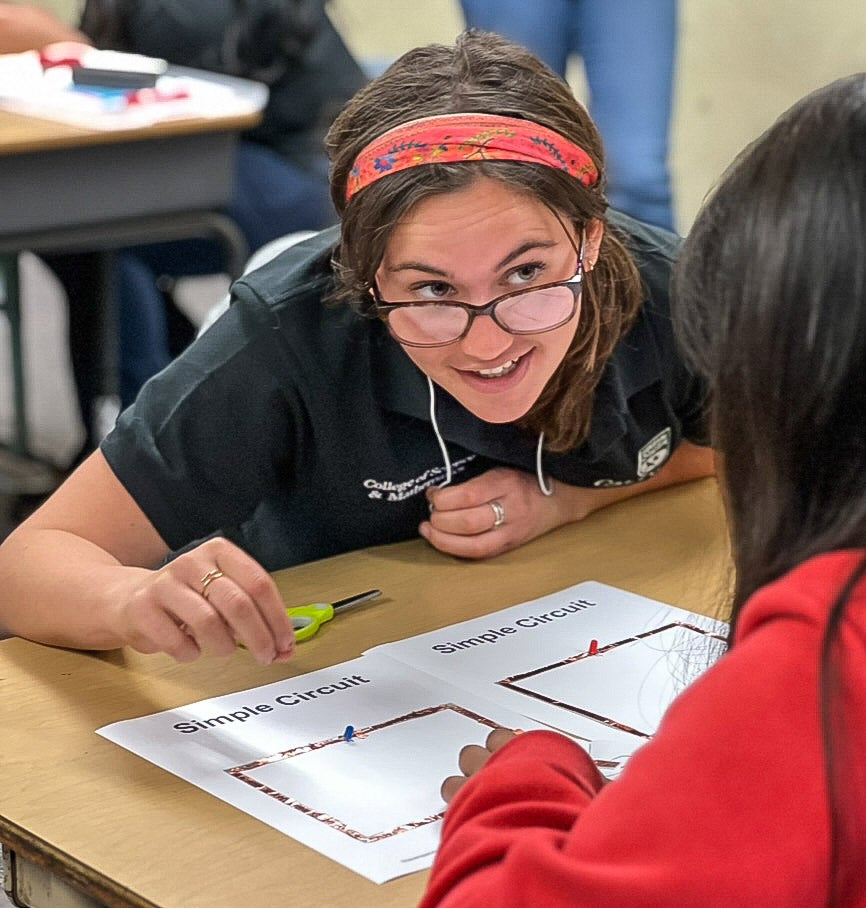
Facilitators learn to strike the balance of encouraging students to push through project setbacks while knowing when to pivot if children become overwhelmed. In doing so, they strive to make thoughtful, student-centered decisions.
Students work on projects such as creating spinning tops. They’re provided with a variety of materials and given freedom to try to recreate a model or experiment with various materials while tweaking their design based on the outcome.
Bridgeford trains her Cal Poly students in the difference between praise and encouragement. Giving students the right guidance to think through problems helps them overcome frustration and better analyze solutions. And in giving a compliment, instead of saying “Good job” a facilitator might say: “You noticed the table was uneven and figured out how to fix it. You're thinking like an engineer.”
“We try not to waste words,” Bridgeford said. “It's those little things that we're trying to do, so that when the mentors go out to the students, they can use that same sort of intentionality and be empowering.”
Nation said that undergraduates who participate in Maker’s work and plan to become future teachers benefit by gaining STEM confidence and training at an earlier stage than often is the case.
“The research explores how we help them take on that STEM identity,” Nation said. “And then can we capitalize on this out-of-school learning before they're enrolled in the teacher credential programs.”
Contreras described writing “Welcome Scientists” on the board at the start of every session.
“Being really intentional with your words and calling it out requires being mindful because it’s not really obvious,” Contreras said. “As a kid, you can say you fixed the table, or you can say you did some engineering.”
When Bridgeford first started asking elementary students to draw an engineer, they would almost invariably draw a white male.
“Now that we've been doing this for 10 years, they're not as likely to draw a white male,” Bridgeford said. “We're not alone at Cal Poly. As a society, we're making those changes.”
Contreras, who is Latina and a first-generation college student, said her presence in the classroom carried weight she hadn't fully anticipated initially.
“I would tell my students: when I was your age, I didn't think I was going to go to college; it didn't cross my mind until later,” she said. “Having those conversations with them, and just being a visual reminder that this could be them one day, is extremely rewarding.”
Her goal wasn't to push students toward STEM careers, it was to make sure they knew the door was open.
“I didn't want to force it on them,” she said. “I just wanted them to know: ‘This is an opportunity that you can have.’ Especially knowing it was a majority Latinx student population, having a mentor like me that looks like them provides that connection that is really personal.”
Contreras, who graduated in 2025, and is completing her teaching credential at Cal Poly. She plans to bring what she's learned into her own elementary classroom.
“I know how to incorporate hands-on learning for students,” she said. “And preaching resiliency to overcome failure to them is not something we should be afraid of.”
One of her student-teaching students seemed to get the message. At the end of the semester, Contreras received a card.
“Someone wrote: ‘You taught me to never give up and to keep trying.’”
That, Contreras might say, is thinking like an engineer.
Explore the Full Issue
Published as part of Milestones, a special commemorative issue magazine from the Cal Poly Bailey College of Science and Mathematics in 2026.


