
Sarepta Scholars: Learning Through Industry Partnership

Cal Poly biochemistry students Varsha Chandrasekaran and Kaitlyn Rockwood both feel nervous about the job market as they prepare to enter their final year at Cal Poly.
But they have gained professional skills, industry insights, and confidence through their participation in the Sarepta Scholars program, a Cal Poly partnership with the company Sarepta Therapeutics to help prepare them for what’s next after their planned graduation this spring.
“The job market is definitely something everyone is a little nervous about, but with this experience, as well as our Cal Poly background, we’re very qualified and capable of doing well in interviews, being able to draw on the experiences that we’ve had so far,” Rockwood said. “I think that really sets us apart from others who also may be applying. I’m very excited to see where the future leads.”
The Sarepta Scholars program already has served three cohorts of student scholars over the past few years as a committed industry partner to the Bailey College, offering students industry-specific mentorship, research and learning opportunities.
“It’s much more than an internship,” said Jean Davidson, a Cal Poly biological sciences professor and a Sarepta Scholars program co-coordinator. “What Sarepta has carved out for us, which is unique, is that our students do summer internships with the company in Columbus, Ohio, where they have an amazing experience and get to see biotech firsthand. But then they come back, and they are to keep working on those projects through ongoing research over the next academic year during which we set meetings, have agendas and deliver results back to Sarepta.”
Sarepta Therapeutics is a global biotechnology company focused on developing precision genetic medicines for rare diseases, including Duchenne muscular dystrophy (DMD), which affects about 1 in 3,500 to 5,000 boys, according to the Muscular Dystrophy Association. DMD, with symptom onset typically occurring between ages 2 and 3, causes progressive muscle weakness and loss.
In June 2023, the U.S. Food and Drug Administration (FDA) granted Sarepta accelerated approval for its breakthrough gene therapy Elevidys, which is administered as a one-time intravenous infusion for individuals with DMD. The therapy delivers a modified form of the dystrophin that helps patients suffering from DMD.
The Cal Poly-Sarepta partnership program includes a paid summer internship at the company’s Genetic Therapies Center of Excellence in Columbus, Ohio, and scholarship funding to support academic work. Sarepta scholars continue their lab research during their final Cal Poly academic year, using a lab workstation gifted by the company, located on the third floor in the Frost Center for Research and Innovation.
Two students are selected annually to become Sarepta Scholars as they enter their senior year. In addition to interning, scholars have presented their work at the Bailey College Student Research Conference and the Evening of Green and Gold, a Cal Poly donor and volunteer recognition event. They also talk to classes and clubs, and recruit people to apply for the next Sarepta Scholars group prior to graduation.
Several Cal Poly graduates currently work full time at the company’s Ohio and Massachusetts locations.
“The students that come to Sarepta out of Cal Poly are some of the best we have seen,” said Gary Charbonneau (Biological Sciences, ’89), Sarepta’s Senior Vice President, Quality and Enterprise Services. “The ‘Learn by Doing’ environment at Cal Poly is much more than a motto. These students are exposed to some of the latest research techniques and given a broad education that enables them to feel comfortable jumping right into the science at Sarepta. I realize that Cal Poly students gain a lot from the experience at our state-of-the-art laboratory in Columbus, Ohio, however, it is Sarepta that ultimately benefits.”
Training at Sarepta
During their summer internships in Ohio, the students learn how teams collaborate on projects and develop a clearer sense of the career pathways they want to pursue.
“We were assigned multiple rotations between different departments of the company, and we learned how the pieces fit together in the overall goal of the company,” Chandrasekara said. “That really helped me put into perspective how everyone worked together, from the non-clinical department to the translational team and the research operations. I just really gained a lot of experience in how an industry-level company really worked.”
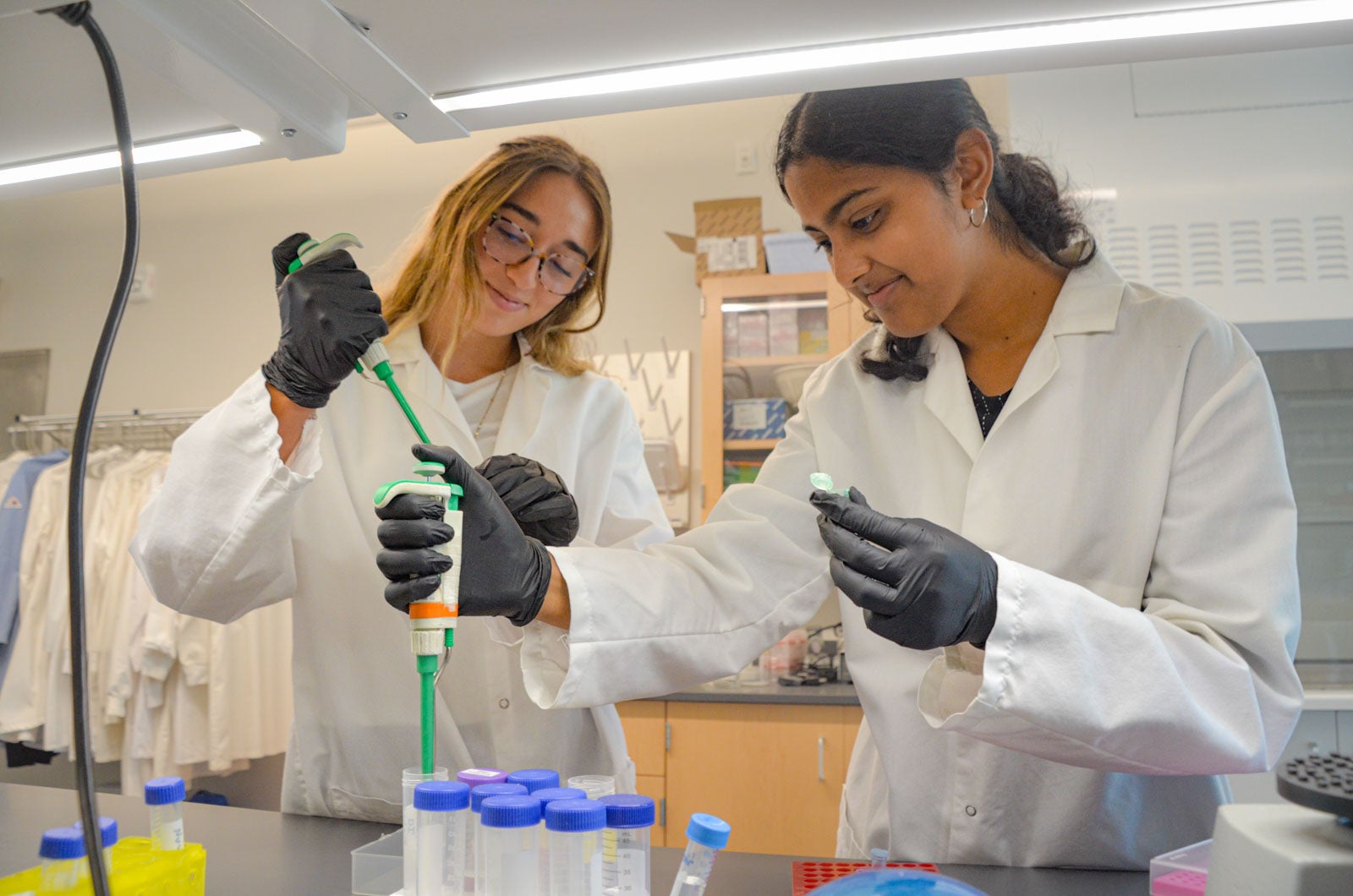
Students performed experiments, running their own PCRs (polymerase chain reaction), a laboratory method used for making copies of a small piece of DNA. Their continued work on the Cal Poly campus involves specialized studies of gene expression designed to help the Sarepta team better understand how to treat rare disease.
“We weren’t able to touch or handle clinical samples,” Rockwood said of their internship experience. “But we were able to run our own lab tests and learn about the lab scientists’ thought processes as they worked through their assays. But just being there and seeing clinical samples was super meaningful for me.”
Chandrasekara said she was impressed by the company’s focus on patients, recalling seeing photos “all around the company” when she first arrived.
“That really helped give me a better sense of who they're really doing this for,” Chandrasekara said. “At the very end of the day, it's the patient who is benefiting from all of this, and that’s a really good motivator. All of this research matters for that person.”
Throughout the process, students ask myriad questions, observe work in action, and meet Cal Poly alumni employed by the company, including Charbonneau and other former Sarepta scholars.
“Everyone there was very welcoming,” Chandrasekaran said. “I thoroughly enjoyed meeting every single department head and working with them. We were able to ask a lot of questions, and they were very happy to answer every single one. And it just made us want to learn more about what they do.”
Rockwood said Cal Poly coursework has prepared them well to join in technical discussions with familiarity of terminology and processes. She learned from Sarepta pathologist Betsy Pray about an unfamiliar field, finding that mentorship relationship extremely valuable.
“I learned a lot from her and met with her for lunch to learn more about pathology, and had experiences like that during the course of the summer that went beyond just the internship itself,” Rockwood said. “The connections were really valuable.”
Cal Poly Prepares Students for Success
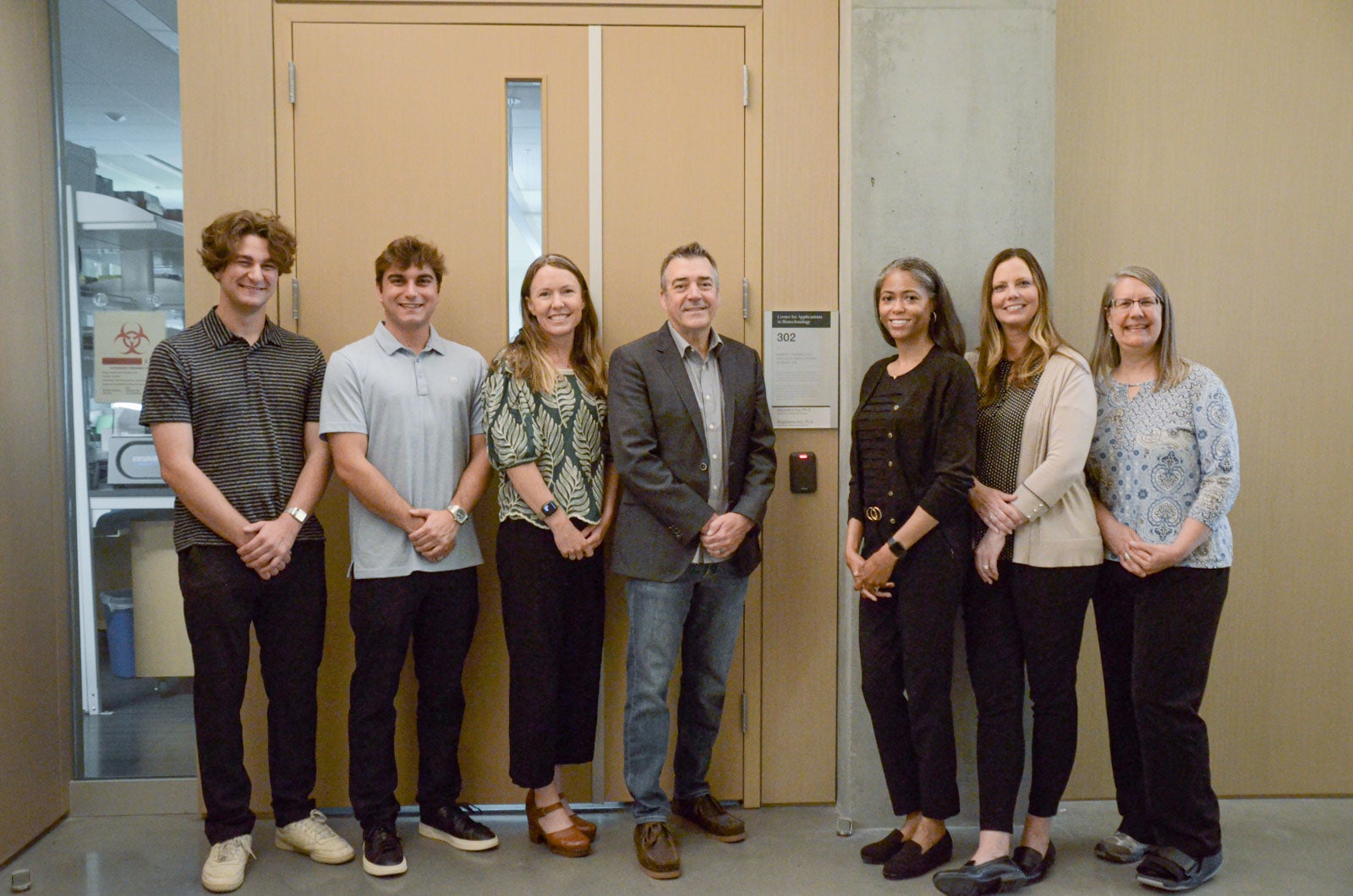
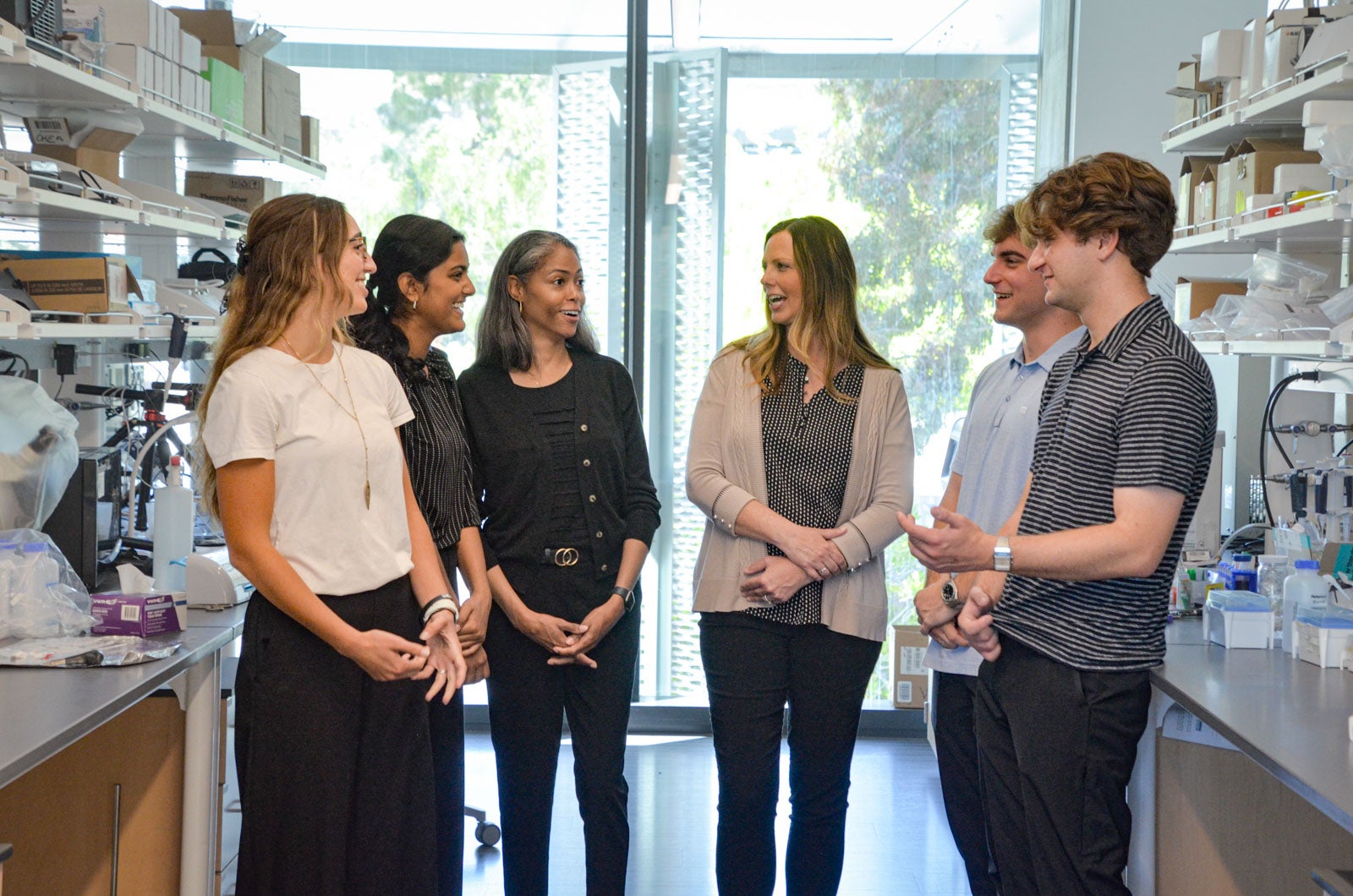
This fall, the students are conducting lab work under the mentorship of Jennifer VanderKelen, a biological sciences lecturer and researcher in Cal Poly’s Center for Applications in Biotechnology (CAB) with additional support and program guidance from Davidson, a CAB co-director.
“I've made it a practice to meet with the students on a weekly basis to make sure that they're making forward progress,” VanderKelen said. “And if they have any technical issues, then I can help them through that. We also have been meeting with Sarepta scientists on a biweekly basis to ask them any questions about any details.”
VanderKelen said Sarepta Scholars have learned important lessons about conducting research, and developing a business and clinical perspective.
“There's much more regulation involved in doing clinical work than students typically experience in their coursework or other type of research on campus, so I think having that background and knowledge is helpful for the students,” VanderKelen said. “They must pay careful attention to follow quite strict rules about how to track and record their work.”
Davidson, who oversees the programmatic aspects of the Sarepta partnership, called the relationship a “wonderful collaboration” that includes exposure to the various aspects of a professional company including lab work, marketing, human resources, compliance, project deliverables and much more.
“Students keep working on the collaboration but really take ownership of it here,” Davidson said. “We recruit students who know that it’s not my science, it’s not what my lab does, and it’s not what Dr. VanderKelen does. This is what the students do through their work with Sarepta, and they become the experts on the project.”
Davidson added: “They get to leave with a real job that they can talk about and experience checkpoints along the way. They must figure things out and develop professional relationships. They can draw upon these types of experiences for the rest of their careers.”
Give here to the Bailey College Industry and Innovation Fund, which supports career discovery, readiness and placement for our students.


